There’s a moment a lot of us are living through right now that feels uniquely hopeless:
You’re talking about a policy, a video, a protest, or a tragedy. You’re trying to stay anchored to facts and process. And suddenly the conversation flips into something like:
- “God is going to judge you.”
- “Jesus only loved legal immigrants.”
- “If you disagree, you’re evil.”
- “Real patriots believe X.”
And just like that, the discussion isn’t about what happened or what should be done. It becomes a moral loyalty test. You’re no longer debating an issue; you’re being placed outside the tribe.
This is not just “emotion.” It’s a recognizable reasoning failure that shows up on both sides:
The reasoning problem: unsupported authority plus a personal attack
In plain English:
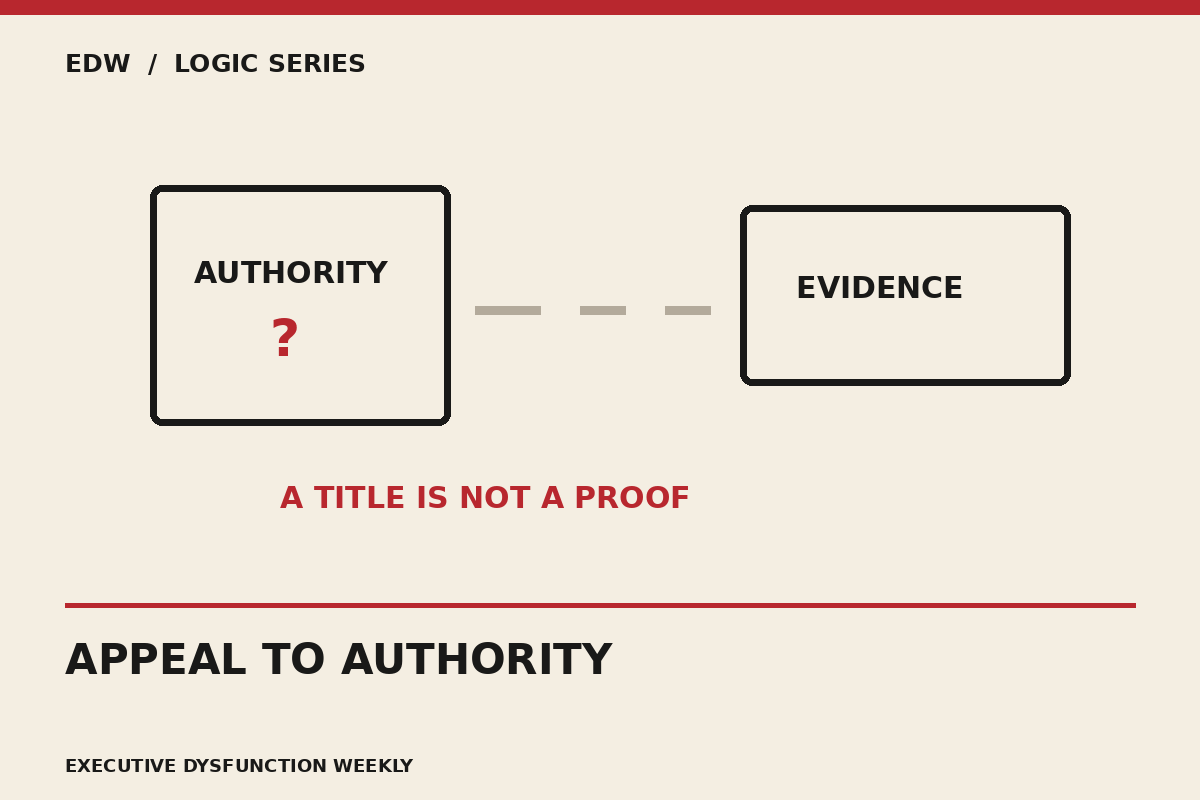
“My position is right because it comes from a higher moral authority; therefore you don’t just disagree, you are morally defective.”
Sometimes it’s explicitly religious (“God says…”). Sometimes it borrows secular authority (“History will judge you,” “Science says,” “The Constitution says,” “All decent people know…”). Citing science or the Constitution can be entirely relevant. The failure comes when the speaker treats an unsupported claim of authority as proof and attacks the character of anyone who questions it. The pattern here is:
1) Claim moral purity for your side.
2) Frame disagreement as a character flaw.
3) Skip the hard work: evidence, tradeoffs, and accountability.
When this happens, reasoning stops and identities take over.
Why it’s so persuasive
Moral language is powerful because it does two things at once:
- It gives the speaker certainty without having to prove anything.
- It pressures the listener to either submit or escalate.
That’s why it’s everywhere in politics. It’s not meant to persuade. It’s meant to dominate.
And here’s the kicker: it works best when we respond the way it wants us to respond (angry, mocking, contemptuous), because then the speaker gets to say, “See? You’re exactly what I said you were.”
How to recognize it in real time
If you hear any of these moves, watch for a moral loyalty test replacing the argument:
- The person stops talking about the policy and starts talking about your soul, your motives, your intelligence, or your worth.
- “If you cared about people, you’d agree with me.”
- “Only a monster would question this.”
- “You’re either with us or against us.”
- “God/Real Americans/Real Christians/Real feminists/Real patriots… believe this.”
When the argument becomes “good people agree with me,” it’s no longer an argument. It’s a membership test.
The EDW rule: Refuse the frame
Your job is not to win the moral shouting match. Your job is to calmly move the conversation back to something that can be evaluated by a shared standard.
Here are three responses that work surprisingly well, because they don’t attack the person, they attack the logic:
1) The “shared values, separate questions” response
“I hear that this is moral for you. I’m not arguing against compassion or faith. I’m asking a different question: what evidence supports this claim, and what process makes it lawful?”
This defuses the accusation (“you’re evil”) and returns to reality: evidence and rules.
2) The “principle, not tribe” response
“I’m not asking you to change your values. I’m asking whether you’d accept this same tactic if the other side used it.”
This reveals the real issue: most people don’t hold a principle; they hold a weapon.
3) The “define your terms” response
“When you say ‘God wants this,’ what does that mean in practice? What action are you justifying, and what limits do you accept?”
Moral claims always hide a policy demand. Drag it into the open.
A practical example (immigration)
If someone says, “Jesus only loved legal immigrants,” you don’t have to become a theologian or start a war. Try:
“I’m not comfortable using Jesus as a border policy. We can talk about enforcement, but we’re still accountable for how we treat human beings in the process.”
Then pivot to a concrete, checkable demand:
- transparent investigations after lethal force
- clear identification for agents
- judicial warrants for home entry unless valid consent or another recognized exception, such as exigent circumstances, applies
- published policies instead of rumors
That’s how you keep it grounded.
Why this matters right now
When leaders and media figures train the public to treat disagreement as sin, they create a country where:
- violence feels righteous
- cruelty feels patriotic
- and accountability feels like betrayal
That is how institutions degrade. Not overnight. Through daily permission slips.
The challenge (for all of us)
Before you share the clip, before you repeat the slogan, before you post the dunk:
Ask yourself one question:
Am I trying to understand, or am I trying to win a purity contest?
If you want to build a country you recognize, we have to stop outsourcing our thinking to moral theater.
If this helped, please share it. If you want more “good-faith tools for hard conversations,” follow Executive Dysfunction Weekly (EDW). We’re building a corner of the internet where people argue like adults, not like tribes.
EDW•