Reader warning.
This is a long one.
This story deserves more than a headline and another round of people pretending they know what happened because somebody yelled into a camera.
Before Iran swallowed the news cycle, America was already living inside the usual Trump fog machine.
Prices were still hurting families. Tariffs were still shaking markets. Courts were still being treated like customer service desks that gave him the wrong answer. Washington was still arguing about power, loyalty, investigations, and whether the rule of law applies when it gets inconvenient.
Then there was Epstein.
Pam Bondi, Congress, redactions, file releases, survivors demanding accountability, lawmakers asking who saw what, who hid what, who protected what, and whether Trump had any role in the way the Epstein files were handled.
That story was ugly.
It was also exactly the kind of story powerful people hate because it cuts across the fake tribal lines. Epstein was rich. Connected. Protected. Useful to people who would rather talk about anything else.
That is the kind of news moment where a serious country slows down.
Instead, we got a war.
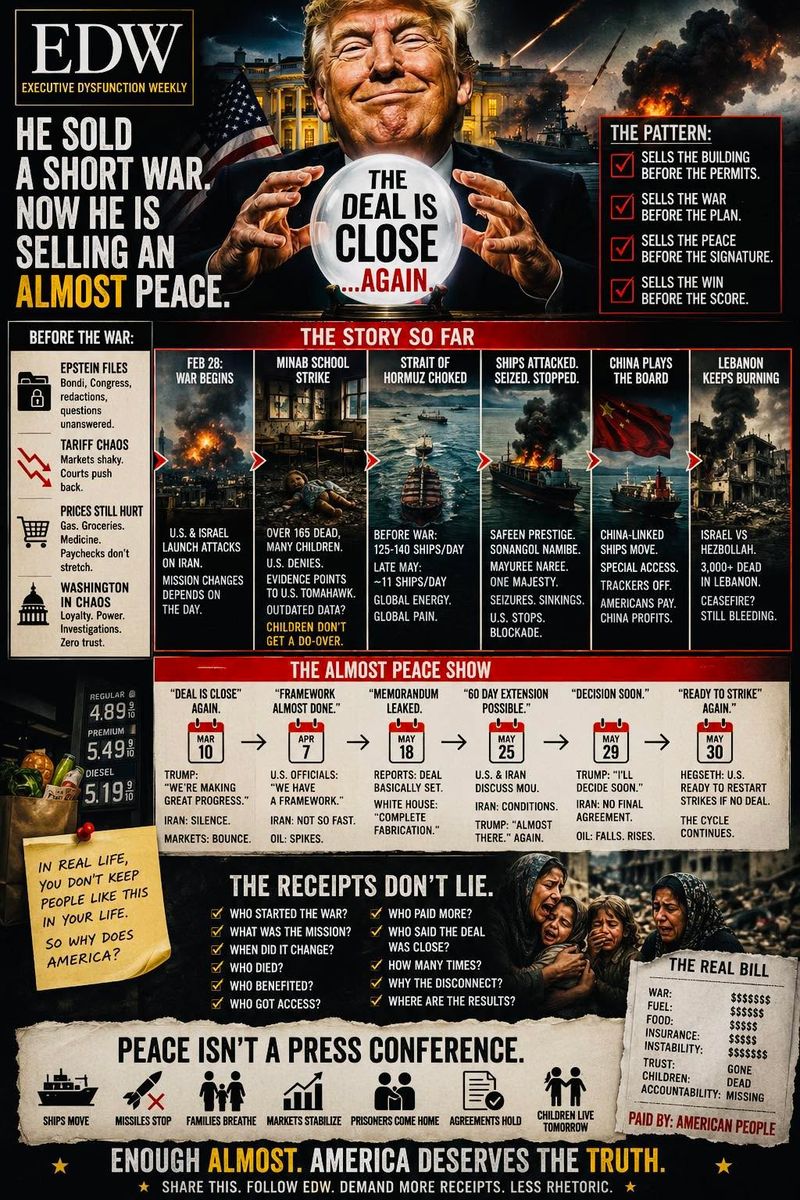
On February 28, the United States and Israel launched attacks on Iran. The public was told this was about stopping Iran from getting a nuclear weapon. Fair enough as a goal. Nobody sane wants a nuclear Iran.
Then the mission started changing clothes.
Was it nuclear weapons? Missile capacity? Regime change? Regional power? Israel’s security? Freedom of navigation? A short campaign? A pressure tactic? A war to force a deal? A deal to justify the war?
Depends which day you asked.
That is usually a bad sign.
Strong policy can be explained cleanly. Weak policy needs fog, volume, and a new slogan every morning.
The first version was simple enough for television. Hit Iran. Cripple the threat. Show strength. Force a better deal.
Then the real world showed up, as it rudely tends to do.
A girls school in Minab was hit early in the war. Iranian officials said scores of children were killed. The administration line started where these things always start. We would never deliberately target a school. We need an investigation. Be careful. Fog of war. Trust us.
Then the evidence started walking back through the door.
U.S. investigators believed American forces were likely responsible. AP reported footage and analysis pointed toward a Tomahawk, a weapon only the United States was known to be using in this war. Later reporting raised the possibility of outdated targeting data near an IRGC site.
Think about that sentence for a second.
Outdated targeting data.
Children do not get to be less dead because the spreadsheet was old.
This is the part of war the salesmen never put in the brochure. They talk about strength, precision, deterrence, dominance, and clean victory. Then families are digging through classrooms.
That should have been a national pause.
Instead, the war kept becoming bigger, messier, and more expensive.
Iran squeezed the Strait of Hormuz.
That was the move everyone knew could hurt the world fast. Hormuz is one of the most important energy chokepoints on earth. Oil, gas, shipping, insurance, supply chains, prices. All the boring machinery that becomes very personal when your gas receipt starts looking like a threat letter.
Before the war, Reuters reported traffic through the strait averaged roughly 125 to 140 passages a day. By late May, Reuters reported daily transits had fallen to around 11.
That is the wiring.
You can shout energy dominance until the podium catches fire. The market still knows where the ships are.
Ships were attacked, damaged, seized, disabled, rerouted, inspected, delayed, or left sitting in floating uncertainty. Reuters tracked early attacks on vessels including Safeen Prestige, Sonangol Namibe, Mayuree Naree, and One Majesty. AP reported a ship seized near the UAE, an Indian flagged cargo ship sinking after an attack and fire off Oman, and later U.S. military stops under the blockade.
Everybody wanted a clean villain board.
Iran bad. America strong. Shipping free. Deal close.
Very cute.
The actual story was uglier.
Iran squeezed the chokepoint. The U.S. imposed its own blockade. Insurance changed behavior. Crews got stranded. Companies rerouted. China negotiated access. Some ships moved. Some traffic went through with trackers off or under special risk conditions. The strait became less like an open highway and more like a hostage negotiation with oil tankers.
China understood the board.
China linked vessels kept showing up in the reporting. Reuters tracked COSCO movements and tankers bound for China carrying regional crude and products. That does not mean China owned the strait. It means China played the moment like a serious power looking after its supply lines while Americans got told the deal was almost done again.
Great work, everyone.
Very stable.
Very genius.
Very cheap at the pump.
Then Lebanon kept burning.
Israel and Hezbollah were still fighting. Israeli strikes hit Lebanon again and again. Reuters reported the death toll in Lebanon passing 3,000. Israel said it was targeting Hezbollah. Lebanon said Israeli strikes were devastating the country. Iran wanted that front included in the deal environment.
So when Trump talked about an Iran deal like it was one switch on one wall, that was nonsense.
The wiring ran through Iran, Israel, Lebanon, Hezbollah, Oman, Pakistan, Qatar, China, sanctions, uranium, Gulf shipping, insurance markets, and every American family wondering why gas and groceries keep eating the paycheck.
That brings us to the almost peace.
The deal that is always close.
The deal that is close enough to move markets but never quite real enough to open the strait.
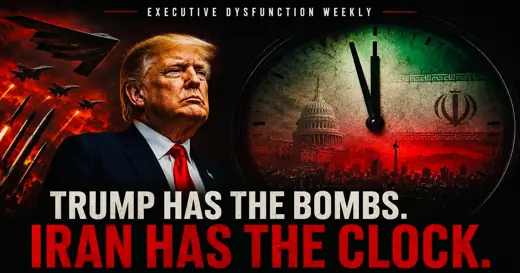
Trump says progress. Iran says wait. U.S. officials say framework. Iranian officials say no final agreement. Somebody leaks a memorandum. The White House denies it. Markets bounce. Oil falls. Oil rises. Shipping stays constrained. Hegseth says the U.S. is ready to strike again if talks fail.
Then Trump says the deal is close again.
At some point, adults need to recognize the pattern.
This is not diplomacy as much as perception management.
In real life, you know people like this.
The check is coming.
The deal is done.
The job is basically finished.
The money is handled.
The problem is solved.
The other side already agreed.
Everybody else is lying.
Give me another week.
You do not keep people like that in your life once you figure out the game. You stop letting them use your hope as their operating budget.
Yet the country keeps doing it with Trump.
He announces the ending before the ending exists. He speaks like the handshake already happened while the other side is still arguing over the main points. He gives the market just enough optimism to breathe for a minute, then reality comes back with another invoice.
This is how he operates.
He sells the building before the permits.
He sells the war before the plan.
He sells the peace before the signature.
He sells the win before the score.
The Iran deal may happen. It might even be worth taking if it gets ships moving, lowers the temperature, reduces the nuclear threat, and stops the bleeding. If it does those things, good. Take the win where the win exists.
But do not let him rewrite the story.
He did not reveal some master plan. He helped light the fire, watched it run through the region, watched children die, watched Hormuz choke, watched energy prices jump, watched Lebanon burn, then started selling the pause as proof of genius.
That is not genius. That is arson with a press secretary.
The most insulting part is how familiar it all feels.
Before the war, the country had real problems. Epstein files. Bondi questions. Tariff chaos. Court fights. Prices. Food. Medicine. Gas. Immigration. Congress pretending cable news is a governing model.
After the war started, those problems stayed.
They just got pushed behind a bigger explosion.
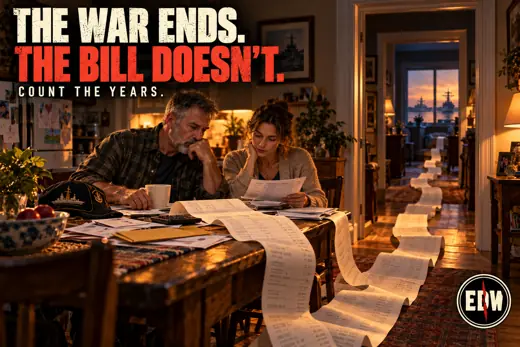
Now we are supposed to clap because the man who helped drive the crisis may approve a 60 day extension to keep talking about ending the crisis.
On May 29, three months after the war began, Bondi sat with House lawmakers and refused to answer questions about Trump’s role in the Epstein files release while defending the Justice Department’s process. The domestic scrutiny had not gone away.
That is like setting the kitchen on fire, borrowing a hose, and asking the family to call you a contractor.
Trump sold strength. America got a long war.
Trump sold control. Hormuz got choked.
Trump sold precision. A girls school became a grave.
Trump sold pressure. China kept maneuvering.
Trump sold an almost deal. Ships still moved in trickles.
Trump sold peace. Hegseth said we are ready to strike again.
That is the story.
The deal may come. The strait may open. Oil may fall. Trump may take his victory lap. Every president does that. Fine. Put on the hat. Wave at the camera. Pretend history started five minutes ago.
EDW is here for the part after the confetti.
We want the receipts.
Who started the war?
What was the original mission?
When did the mission change?
Who died?
Who benefited?
Who got access through Hormuz?
Who paid more at the pump?
Who told Americans the deal was close?
How many times?
Why did Iran keep saying something else?
Why did the public get slogans while markets got signals?
Why did the administration find time to sell certainty before it could deliver clarity?
That is what matters.
A serious country can support stopping Iran from getting nuclear weapons and still demand honesty from its own leaders.
A serious country can support American troops and still ask who sent them, why they went, what the mission was, and how the exit works.
A serious country can want peace and still refuse to applaud an almost peace marketed like a finished product.
This is the part Trump never understands.
The presidency is not a sales floor.
The war is not a branding exercise.
The strait is not a prop.
Children are not collateral copy.
Gas prices are not campaign lighting.
Peace is not real because Trump says it loudly.
Peace is real when ships move, missiles stop, families breathe, markets stabilize, prisoners come home, agreements hold, and the next dead child is still alive tomorrow.
Until then, spare us the victory lap.
Share this if you want the full story, not the stage version.
Like and follow EDW if you think America needs fewer slogans and more receipts.
Because this country has had enough almost truth, almost plans, almost accountability, and almost peace.
We can do better than almost.
EDW•