The algorithm’s favorite question sells outrage. We choose solutions. (EDW community forums edition)
We’re going to say the quiet part out loud because it’s our house and our name on the masthead:
We support the Second Amendment. We oppose an outright ban on AR‑style rifles.
We also support real gun‑safety policies that save lives.
That’s been our position for years, and yes, some folks in our own party try to shove us to the fringe for it. They can stop. Silencing people who share your economic vision because they speak precisely about firearms is how you lose winnable voters, lose credibility, and, most unforgivably, lose lives you could have saved with the right policies.
The hypocrisy (and the bait) we’re calling out
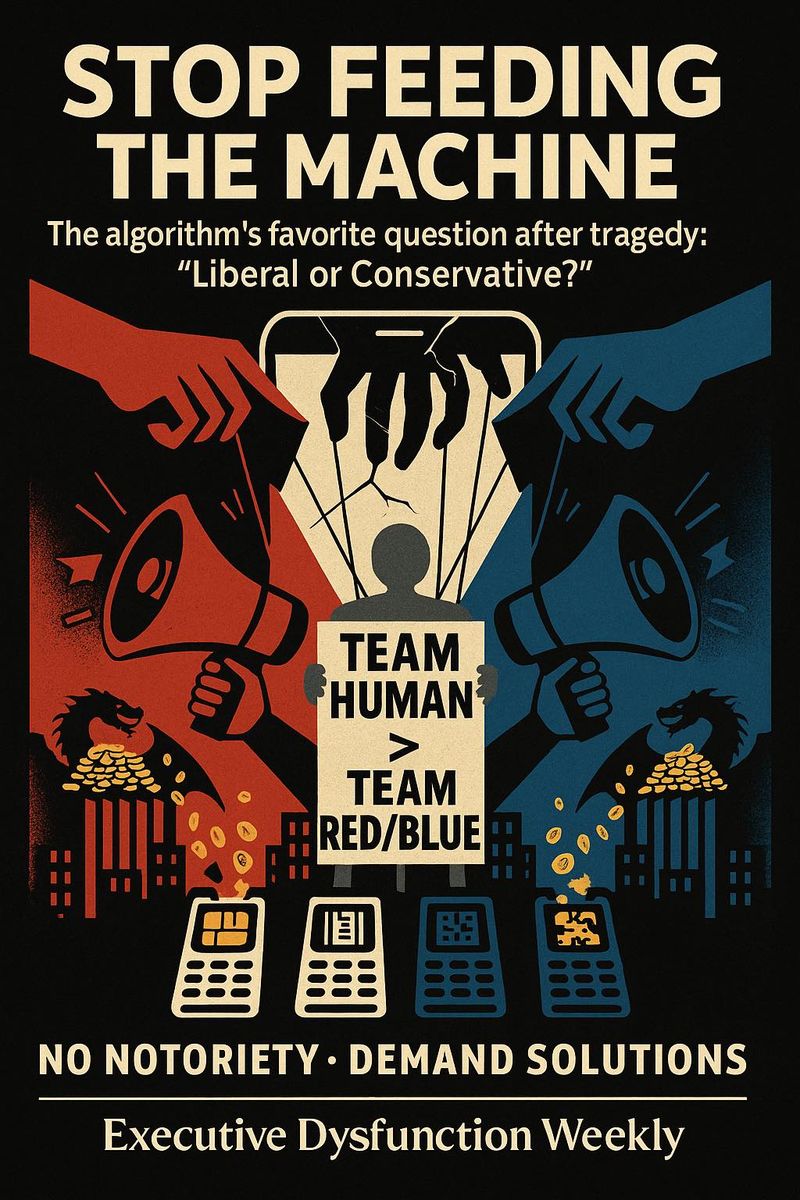
After every massacre, the first viral prompt slithers into your feed wearing a varsity jacket: Was the shooter liberal or conservative?
That’s not journalism. That’s engagement bait. It converts grief into clicks while the policy needle sleeps off another bender.
Meanwhile, the “no guardrails ever” crowd blames gun‑safety advocates for gun violence. That’s like ripping out the seatbelts and then blaming EMTs for car crashes. It’s bad faith, and it’s deadly.
But here’s the part our side needs to hear: the left’s ignorance of firearms (the language, the mechanics, the markets) keeps pushing us into the wrong fights. We alienate gun‑owning voters who should be with us on wages, healthcare, corruption, and civil liberties.
We hand our opponents an identity wedge they can swing forever.
We can do better. We will do better.
What grown‑ups ask after a mass attack
• Access: How did a volatile person get a weapon and a target faster than they got help?
• Signals: Who saw warning signs, and what failed to connect them to intervention?
• Coverage: How do we report without turning killers into brands (names/photos minimized; focus on victims, motive patterns, prevention)?
• Amplification: What platform rules curb the ranking systems that supercharge copycats and division?
“Liberal or conservative?” tells you nothing about prevention. It tells the algorithm everything about you.
Where we stand (and why)
No to an AR‑ban litmus test. It’s a blunt instrument that hardens the culture war, chases away persuadable gun owners, and doesn’t target where most shootings happen.
Yes to practical protections:
1. Universal background checks for every sale/transfer, with teeth against straw buyers.
2. Extreme Risk Protection Orders (red‑flag laws) with due process, so families and police can temporarily remove guns when someone is in acute crisis.
3. Safe‑storage standards + free lockboxes and community programs (stop thefts, stop toddler tragedies, stop teen suicides).
4. Domestic‑violence relinquishment that actually gets the guns out when a court says so.
5. Focused enforcement on trafficking pipelines and the small number of dealers whose inventory keeps turning up at crime scenes.
6. Magazine‑capacity limits (where adopted) to reduce mass‑shooting lethality, paired with fair grandfathering/compensation.
None of this abolishes the Second.
These policies aim to save lives, including cops’, kids’, and the neighbors you claim to protect. The evidence is stronger for some measures than others, and results depend on how they are designed and enforced.
No‑Notoriety is not a slogan. It’s risk management.
Some attackers seek notoriety or imitate earlier killers. Research on whether news coverage produces a short-term contagion effect is mixed. That is still a reason to be careful about turning a killer into a brand. Default newsroom guidance after rampage events should be: minimize the name and image, center victims and verified facts, foreground prevention resources. Don’t turn the killer into a mascot because the algorithm rewards it.
Follow the money (and your attention)
Outrage is a business model. Platforms elevate what travels farthest (anger, tribal bait, falsehoods) because it prints money. While we’re busy scrapping over colors, gatekeepers skim your life in fees, data, and time. The rarest commodity isn’t oil or lithium. It’s your attention, sliced, diced, and securitized.
If we want fewer funerals and a healthier public square, we need policy that reduces both lethality and amplification.
The package we support (guns + information)
A. Gun‑safety package
• Universal background checks
• ERPOs with due process
• Safe‑storage + free lockboxes
• Domestic‑violence firearm relinquishment with enforcement
• Anti‑trafficking focus on repeat‑source dealers
• Optional magazine‑capacity limits to lower casualty counts
B. Information‑safety package
• No‑Notoriety standards for officials and major outlets after rampage attacks
• Algorithmic transparency & duty of care when ranking systems amplify documented harms and potential copycat risks
• Connectivity as essential infrastructure: universal, affordable baseline access so alerts, telehealth, education, and work aren’t gated by poverty
• Real competition in payments to reduce the quiet skim that taxes every transaction and finances the outrage economy
Dear left: stop pushing us out
Stop treating technical accuracy as betrayal. Stop making a hardware ban the price of admission to the coalition. Every time we do that, we bleed voters who agree with us on everything else and who would back strong, targeted safety laws if we stopped insulting their identity and started respecting their knowledge.
You want to win?
Lead with respect, precision, and policies that work. Speak to protection (the top reason people own guns) and to responsibility. Build trust before you build bans.
Dear right: stop playing with matches
If your plan is “no guardrails ever,” you don’t get to blame the people building the guardrails when the car leaves the road. “Thoughts and prayers” isn’t a policy; it’s a shrug.
Our receipts and our relationships
We’ve written this for years, from the perspective of people with a chosen family we intend to keep alive, and friendships with good officers who want to go home safe. We’ve done the homework: policy research, case studies, interviews, ride‑alongs. We know the difference between a magazine and a clip, semi‑auto and automatic, and why definitions matter when you write law instead of slogans.
And to the heckle: “Why is Cody Simpson on the back?”
Because he’s the author. Next question.
The line we’ll keep repeating
Rights without responsibilities become rituals of grief.
Responsibilities without respect become rituals of scorn.
We refuse both. We choose what works.
Final score: The dead don’t care about the shooter’s party. The living shouldn’t either.
Team Human > Team Red/Blue.
EDW•