Jim Rutenberg’s NYT piece captures the pattern we’ve been warning about. Here’s why it matters. (EDW community forums edition)
We haven’t posted much this week (life, work, the book), but this one can’t slide. Jim Rutenberg’s Sept. 18 analysis in The New York Times lays out something we’ve been tracking for months: a governing philosophy that promises “free speech” while building the most aggressive anti‑press machinery in modern U.S. history.
The case study is Jimmy Kimmel’s sudden, indefinite suspension and the way it happened.
What Rutenberg reports, in plain English:
• The administration says it’s “bringing back free speech,” then deploys lawsuits, regulators, and industry leverage to punish coverage it dislikes.
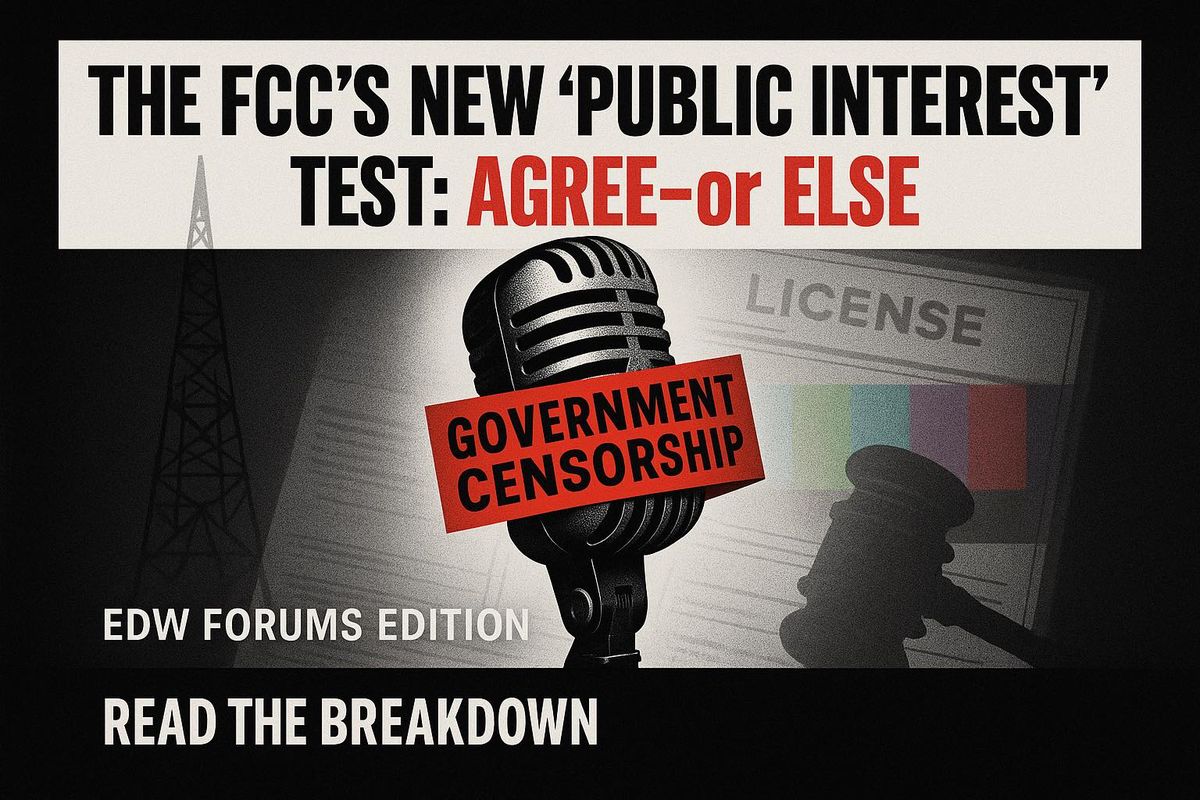
• After Kimmel’s monologue about the Kirk assassination, the FCC chair, Brendan Carr, publicly floated “remedies” against stations that carry his show, invoking the government’s power over broadcast licenses. Within hours, Nexstar (a large ABC affiliate owner) preempted Kimmel; ABC then pulled the show indefinitely. The move echoed the Nixon‑era tactic of rattling local station licenses to force network behavior.
• Layered atop: multi‑million‑dollar settlements in Trump’s suits against CBS and ABC, CBS News’ interview rule changes under political pressure, and Paramount/Skydance’s installation of a conservative ombudsman to field coverage complaints.
Put together, it’s not “cancel culture” from the internet. It’s government‑steered cancellation, with the state’s biggest stick (the broadcast license) raised in the air.
The receipts outside the Times
• Kimmel suspension & affiliate pressure. ABC pulled Jimmy Kimmel Live! “indefinitely” after FCC Chair Brendan Carr suggested punitive action and after Nexstar (and then Sinclair) said they’d preempt the show. Reuters, AP, and others confirm the sequence.
• Carr’s on‑the‑record threats. Carr told Benny Johnson that affiliates needed to push back and later said on Fox that the FCC would “enforce the public interest obligation.” Trade and tech outlets captured the remarks and their implications for licenses.
• The lawsuit–settlement pincer. ABC agreed to pay $15 million toward Trump’s presidential library and $1 million in legal fees to settle a defamation case tied to an on‑air misstatement; Reuters documents a separate $16M CBS/Paramount settlement over a 60 Minutes dispute, arriving as Paramount sought regulatory approvals.
• Newsroom concessions. CBS changed Face the Nation interview rules (live or unedited “live‑to‑tape”), moves widely read as capitulating to political pressure.
• Structural pressure on CBS News. Paramount/Skydance named Kenneth R. Weinstein (a conservative policy veteran) as CBS ombudsman, a commitment connected to merger approvals. (WaPo, LA Times, E&P)
• The broader chilling effect. After the Kirk shooting, JD Vance pushed consequences for speech expressing approval; AG Pam Bondi said “we will absolutely target you… for hate speech,” then tried to narrow it, while Trump told ABC’s Jonathan Karl, “Maybe they will come after ABC. Maybe we should go after you.” These are government actors talking about punishing protected speech.
Why this is different from the usual “outrage cycle”
Platforms can demonetize, mobs can brigand, employers can overreact; that’s bad enough. But broadcast is distinct because the federal government controls entry to the medium through licenses. When the chair of the FCC waves that authority at specific programs and networks (and affiliates with pending business before the FCC promptly fall in line), you’ve left the realm of loud politics and entered state‑press coercion. That’s why scholars are using phrases like “unprecedented in modern American history.”
The playbook, as Rutenberg describes it (and as the record shows)
1. Sue – File high‑dollar defamation cases; settle some to create the aura of merit. (ABC’s payout; CBS/Paramount’s payout.)
2. Scare – Brand critics as liars; signal that the FCC will revisit “public interest” obligations for broadcasters carrying “offending” content.
3. Squeeze – Nudge affiliates (some with business before the FCC) to preempt; let corporate legal retainers do the rest.
4. Celebrate – The president cheers the “cancellation,” then warns a network correspondent that the DOJ might “go after” his outlet.
The goal isn’t just punishment; it’s preemption by fear, the quiet editorial meeting where a segment dies because someone asks, “What will the FCC do to our license?”
What this tells us (and why EDW cares)
• The words don’t match the deeds. A government promising to “restore free speech” while wielding licensing and lawsuits to silence disfavored speech is not defending the First Amendment; it’s replacing it with state‑vetted speech.
• The line crossed here is constitutional, not cultural. You can dislike Kimmel’s monologue and still see the danger in a regulator threatening broadcasters over their content. Courts have long held that government retaliation for protected speech is unconstitutional, no matter who’s in power. (See the legal analyses now flooding op‑ed pages after Bondi’s “hate speech” comments.)
• It’s already moving newsrooms. CBS’s policy change, the CBS/Paramount settlement, and the CBS ombudsman hire show how a steady drumbeat of pressure turns editorial judgment into risk management.
• This isn’t theoretical. ABC’s late‑night slot went dark within hours of the FCC chair’s warning. Whatever you think of Kimmel, that’s coercion with a return address.
What to watch next (no sermons, just signals)
• Licenses & deals: Whether FCC staff now scrutinize renewals or mergers for “public interest” compliance tied to editorial choices. (Watch affiliate owners with pending asks.)
• Copycat pressure: If other officials parrot the Bondi/Vance line (punitive consequences for protected speech) and whether courts step in.
• Newsroom behavior: Quiet cancellations, softened interviews, fewer investigative risks on politically sensitive subjects.
• Next test case: A journalist or outlet that refuses to bend. If license threats follow, the constitutional stakes will be stark.
We said last month that the danger isn’t a bad tweet by a comedian; it’s a state that decides which speech is safe. The arc of the last 72 hours (Carr’s threats, affiliate preemptions, ABC’s suspension, presidential victory laps, DOJ chatter about “hate speech” targets) draws that picture in permanent marker.
If you’re looking for a bottom line, borrow Rutenberg’s frame and the week’s facts: This is not culture‑war noise. It’s a constitutional alarm. And historically, alarms unanswered don’t get quieter; they get drowned out.
EDW•