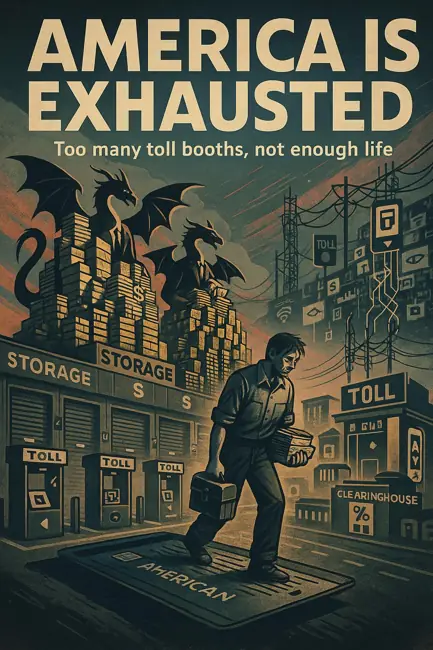
Thesis: Tariff maximalism and weaponized finance are accelerating a structural re‑wiring of global trade. A Russia–China–India (RCI) alignment would not be a NATO‑grade alliance, but a transactional economic bloc (focused first on energy, payments, logistics, and standards) that can steadily raise the cost of U.S. sanctions and tariffs while nudging the world toward parallel financial rails. The danger for Washington isn’t a dramatic flip of the “petrodollar” overnight.
It’s erosion by a thousand workarounds, and India is the hinge.
First, clear the optics
Some recirculated footage of Modi and Putin came from their July 2024 Moscow visit. Separately, Reuters documented them holding hands at the SCO summit in Tianjin on September 1, 2025, as they approached Xi. Without identifying the specific clip, we should not describe all of these images as old footage. Symbolism matters, but context matters more.
Meanwhile, today’s reality is that U.S.–India ties are under acute tariff strain. Multiple reports this week say Washington raised combined tariffs on many Indian goods to 50%, with product exemptions in response to India’s discounted Russian oil purchases; Delhi says it’s negotiating a bilateral trade fix even as pressure mounts. In parallel, President Trump claims India offered to cut its own tariffs on U.S. goods to zero. However that posturing resolves, it’s an unmistakable sign of coercive tariff diplomacy that risks pushing Delhi to harden its hedging.
What an RCI “economic front” would actually do
1) Consolidate energy trade outside Western chokepoints
• Energy gravity is already there. Roughly 80% of Russian crude now goes to China and India, with a growing “dark fleet” and widespread price‑cap evasion. Sanctions have cut revenue, but the cap’s bite has dulled; flows adapt to the enforcement pattern. Expect more shadow logistics, more non‑Western shipping insurance, and more non‑USD invoicing over time.
• Tariffs backfire risk. Russian discounts widened, some Indian refiners resumed purchases, and traders projected higher September imports despite U.S. tariffs. That does not establish tariffs as the sole cause, and the September increase was still a forecast. This is classic “squeeze the balloon” economics.
Implication: The more Washington leans on tariffs and secondary pressure, the more it subsidizes the creation of a non‑Western energy trading ecosystem that prices and ships around Western levers.
2) Scale parallel payment rails (SPFS, CIPS, BRICS Pay)
• China’s CIPS is deepening. Even with the yuan’s global SWIFT share hovering in the ~3% band, CIPS participation and volumes are expanding; HSBC Hong Kong joined as a direct participant, a notable market signal. Beijing is explicitly telling SOEs to prioritize RMB settlement abroad.
• RCI interop is the play. Russia’s SPFS has spread across dozens of jurisdictions post‑sanctions; BRICS finance ministers are again scoping an interoperable BRICS payment mechanism to reduce SWIFT exposure. None of this dethrones the dollar soon, but it raises switching costs for sanctions and creates good enough rails for large, sanctioned trades.
• India is pivotal. Delhi is negotiating RuPay–Mir acceptance and rupee–rouble settlement structures, while the RBI is opening channels for Russian surplus rupees to park in Indian central-government securities, including Treasury bills, via Special Vostro Accounts, turning inert rupee pools into investable capital.
Implication: Payment fragmentation won’t kill the dollar; it complicates it. Treasury sanctions stay potent, but the friction premium rises for U.S. and EU firms as more trade migrates to parallel pipes.
3) Lock in non‑Western standards in logistics and tech
• Logistics: China and Russia are institutionalizing pre‑2030 corridors and customs integration. If India plugs in at the edges (ports, rail, cold‑chain for energy), RCI could define default routes for Eurasian trade, outside Western insurers and brokers.
• Tech and capital: India’s FDI rules for China remain politically charged, but the debate is tilting toward selective easing to boost supply‑chain participation. A limited thaw would let Chinese capital and components seep back into India’s manufacturing push, on Delhi’s terms.
Implication: The “China+1” strategy that Washington has promoted (shift from China into India/Vietnam) gets scrambled if Delhi normalizes some China inputs while deepening Russia energy/defense ties.
Why “RCI is inevitable” is too strong, and why it still matters
• Enduring Sino‑Indian mistrust. The 2024 border de‑escalation reduced risk, but did not resolve core disputes; both sides maintain robust military postures. This caps true strategic trust, even if flights resume, talks proceed, and tariffs from the U.S. nudge temporary warmth.
• India’s strategic autonomy. Delhi will not become Beijing’s junior partner. Its play is leverage: maximize energy advantage with Moscow, extract tech/market access from Washington, and keep options with Beijing to discipline both.
Translation: Don’t expect a formal anti‑U.S. alliance. Expect transactional triangulation that still erodes U.S. leverage at the margins.
If RCI tightens, what breaks first? (Financial channels to watch)
1. Dollar demand at the margin
• Watch: Share of Russia–India oil invoiced in RMB/INR; growth in CIPS direct participants; BRICS payments pilots with real settlement volumes (not communiqués). Today, the yuan’s SWIFT share is ~2.9–3.5% depending on the month, down from spikes last year, but that understates CIPS usage. Any step‑change toward 10% intra‑BRICS trade settled off SWIFT is consequential for sanctions efficacy, not reserve status.
2. U.S. inflation and rates via commodities
• Watch: The size of the “dark fleet,” discounts on Urals to India vs. Brent, and spreads in non‑Western insurance. If price‑cap leakage widens and tariffs keep re‑routing flows, expect higher volatility in pump prices and sticky services inflation.
3. Corporate compliance costs
• Watch: Bank notices about SPFS/CIPS exposure, and multinational guidance on dual invoicing and multi‑rail payments. Every new workaround is another line item in compliance and FX hedging.
4. India’s capital account signals
• Watch: RBI circulars that expand rupee Vostro flexibility, permissions for third‑country use of rupee pools, and progress on RuPay–Mir acceptance. These are concrete, domestic policy levers that turn symbolic hedging into operational hedging.
Three plausible scenarios (12–36 months)
A) Status‑Quo‑Plus (Most likely)
• India hammers out a tariff détente with Washington while continuing discounted Russian crude purchases; minor wins on payments interop with Russia; more CIPS participants in Asia; yuan share on SWIFT oscillates near 3%. U.S. sanctions remain potent but costlier to enforce.
B) Bloc‑by‑Function (Medium probability)
• RCI formalizes energy & payments coordination without defense alignment: common documentation standards for non‑USD settlement, expansion of bilateral card schemes (RuPay–Mir), and port insurance consortia outside the West. Commodity flows stabilize outside Western insurers; price‑cap enforcement weakens further.
C) Hard Fragmentation (Tail, but rising)
• A new U.S. tariff round (or secondary sanctions) hits Indian refiners or shipping hubs; Delhi retaliates symbolically and accelerates BRICS payment pilots; Riyadh/Abu Dhabi price some oil in RMB/AED to BRICS counterparties. Not a dollar collapse, but enough basis risk to push up U.S. funding costs on the margin and to spook supply‑chain CAPEX.
Winners & losers (if fragmentation deepens)
• Winners:
• Commodity traders & shipowners able to arbitrage sanctions friction and logistics gaps.
• Non‑Western banks specializing in RMB/INR/dirham corridors and CIPS connectivity.
• Indian refiners buying discounted Russian barrels and exporting higher‑margin products to non‑U.S. markets.
• Losers:
• U.S. and EU corporates stuck with higher compliance and FX hedging costs, and intermittent input inflation.
• Western shipping insurers displaced by sovereign and BRICS‑aligned consortia.
What Washington gets wrong, and the off‑ramp
• Tariffs are a megaphone, not a screwdriver. Blunt tariffs harden hedging behaviors abroad and fertilize the very alternative rails Washington fears. The more “reciprocal” tariffs proliferate, the more parallelism we’ll see in payments, logistics, and standards.
• The off‑ramp: Narrow, coalition‑based sanctions enforcement; positive‑sum tech and market access with India (not conditional humiliation); and quiet deals on energy flow predictability. If you want Delhi not to lean on Moscow and not to flirt with Beijing’s rails, stop delivering a masterclass in how to live without the dollar.
EDW bottom line
You don’t need a formal RCI alliance to lose ground. You just need enough energy, enough payments interop, and enough standards to make Western levers less convenient. Tariff maximalism is an accelerant. The dollar won’t fall; it will fray at the edges. And edges are where businesses live.
Quick fact checks & receipts
• U.S.–India tariff rupture & “zero tariffs” claim: India says it’s negotiating a bilateral deal amid a U.S. move to 50% tariffs; Trump claims Delhi offered zero on its side. Both true as statements; neither implies resolution.
• Energy adaptation: China/India now take ~80% of Russia’s crude exports; shadow fleets blunt the price cap.
• Yuan & parallel rails: Yuan’s SWIFT share hovered around ~2.9–3.5% in mid‑2025, but CIPS keeps expanding (HSBC HK joined as a direct participant); Beijing is urging RMB settlement abroad.
• India–Russia payment workarounds: RuPay–Mir talks and RBI steps to mobilize rupee Vostro balances expand non‑USD settlement options.
• Viral Modi–Putin clip context: Some recirculated clips came from July 2024 in Moscow, but genuine hand-holding footage was also recorded at the September 1, 2025 SCO summit in Tianjin.
What to watch next
• RBI circulars on SRVA flexibility; any permission for third‑country use of rupee pools.
• BRICS Payment Task Force announcements with live pilots (not PDFs).
• CIPS monthly participant list; any Gulf banks onboarded.
• Changes in discounts for Urals vs Brent into India and freight insurance sourced outside London.
• Any U.S. move to expand tariffs/sanctions to Indian refiners or shipping, the tripwire for Scenario C.
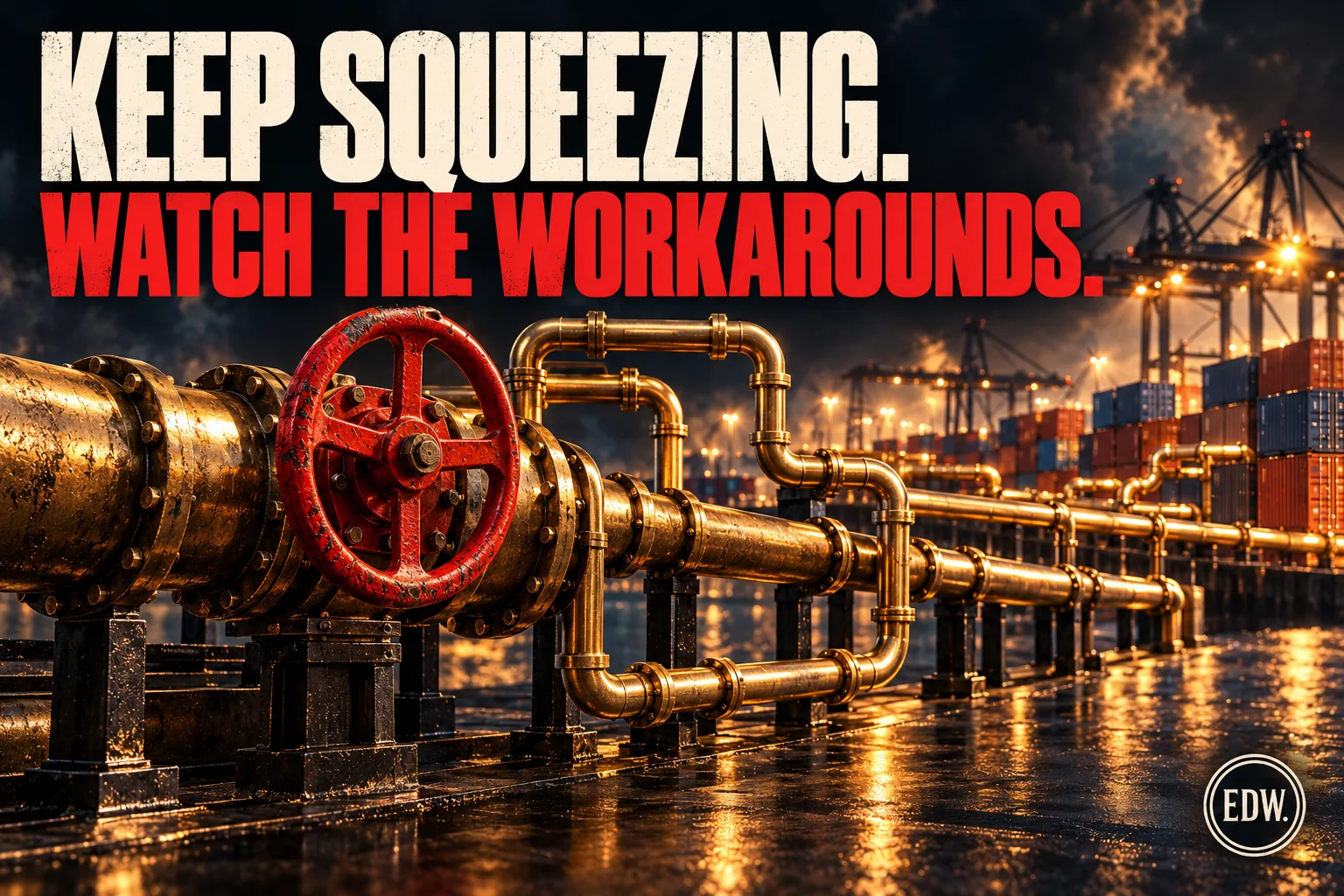
“Tariff Showmanship Is Building the Opposition’s Plumbing.”
The White House can punish invoices; it can’t police every hose and valve being laid across Eurasia.
Keep squeezing, and you don’t get capitulation; you get workarounds with scale.
EDW•