(EDW: neighbors first, no jerseys)
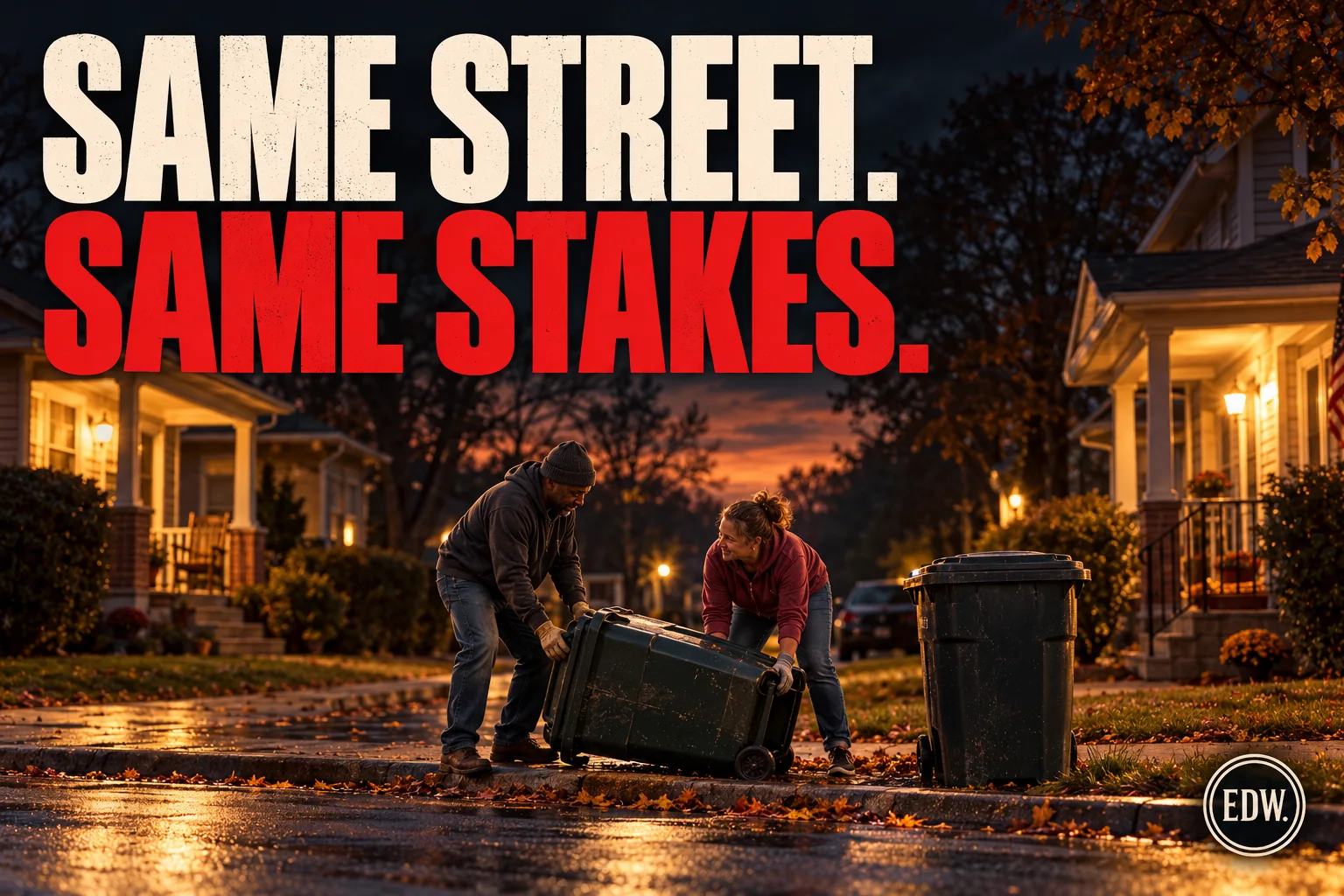
Picture two houses on the same street, trash cans at the curb, flags moving in the same wind. Inside both, somebody flips on a show that keeps score. By the time the cans are empty, the scoreboard says one thing: if they lose, we win.
That’s the trick.
Once the parties teach you to see your neighbors as the enemy, governing gets effortless. You don’t need ideas; you only need opposites. Do what the other side hates. Block what the other side wants. The fans cheer. And a new reflex slips into our bones: we start hoping the people across the street fail, so our team can feel tall.
It doesn’t stop at cable.
It leaks into the bleachers, the checkout lane, the group chat. You can feel the culture tilting toward a cheap high: a little surge of gladness when somebody stumbles. Plenty of “leaders” encourage it because it’s easier to sell schadenfreude than solutions, and the algorithm pays cash for clicks that bruise.
We built a reward system for the loudest purists and called it virtue. Super PACs spray lighter fluid on the pile. Outrage media hands out matches. The money flows where the anger goes. You don’t have to write a plan if you can keep us booing.
You don’t have to build anything if demolition gets the ratings.
The pitch to copy the other side’s strongman is always waiting. “Get our own brawler.” “Fight fire with a flamethrower.” It feels satisfying for a minute, right up until you remember that flamethrowers don’t build towns. If you hire someone to punch your neighbors, you’ll get a lot of punching and not many neighbors.
I keep thinking about compromise, how it used to mean Christmas and Thanksgiving without a battle plan; how it meant two imperfect sides making boring trades so most of us could actually live. Now the only thing that pays is performative purity. We’ve turned politics into an attention economy where the prize for refusing to cooperate is a bigger microphone.
The anxiety that follows?
It’s ambient. We’re braced for pile‑ons. We watch strangers try to ruin each other for a sentence instead of correcting each other like adults. We hold our breath before we speak. We doomscroll because the machine is tuned to fear. We go to bed with a fight in our pocket and wake up to fresh kindling.
When I played tournament chess, one‑move players didn’t last. They grabbed whatever was in front of them and called it strategy. That’s our politics now: one‑move thinking with a megaphone. Kick today’s hornet nest, sell the clip, ignore tomorrow. Builders plan three, five, seven moves out. Performers don’t.
There’s another layer we don’t like to talk about: the flood. Gatekeepers used to exert more control over what reached a large audience; they did their gatekeeping (too much, sometimes), but they filtered noise. Now the floodgates are gone. Everything speaks, all at once. Truth and nonsense share a microphone, and the loudest often wins. No wonder people don’t know what to believe.
No wonder we grab our team colors and hold on.
Writers have a job in this mess. Not to scold. Not to flatter. To make the real visible again. To hand people scenes they recognize in their bodies: the Friday‑night bleachers, the school nurse’s office, the hospital waiting room, the checkout light that never seems to turn green. To offer language that clears the fog instead of adding to it.
So ask the questions that pull truth to the surface:
• Does this candidate make me hate my neighbors, or help me live with them?
• Have I ever heard them say “I was wrong”? Even once?
• Do they cool things down when their own crowd overheats?
• If their plan “wins,” does my family’s life get easier, or does their media footprint just get bigger?
Swapping verbs is a bias test.
Do we describe the other side’s moves as “caves” and “betrayals,” but ours as “trades” and “harm‑reduction”?
Same facts, different words: watch yourself doing it. The machine thrives on that slide.
We don’t have to.
A few refrains we’ll keep repeating because they keep being true:
It isn’t the Tylenol. It’s the empty chair.
Don’t ask who the shooter voted for. Ask who profits from the fight.
This isn’t Left vs Right. It’s war‑addicts vs neighbors.
You don’t have to get soft to get sane. Keep your convictions. Trade in the contempt. Reward the people who can do the boring math of governing so our kids don’t grow up in a permanent outrage economy.
If your politics needs you to hate your own, it doesn’t deserve your vote.
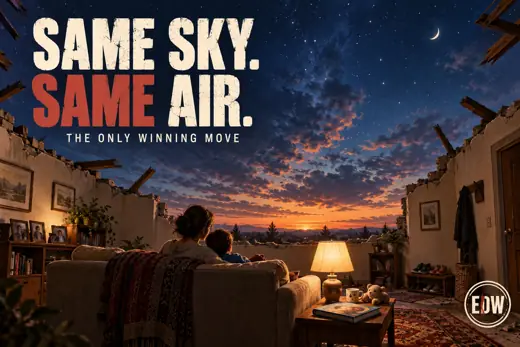
We’re still the same street. We can still be a community. The fastest way back isn’t a new strongman; it’s a new standard, lived out loud and close to home. The truth isn’t hiding. It’s just quieter than the noise. Our job, as neighbors, as readers, as writers, is to make it heard again, before the flood carries everything away.
EDW
EDW•