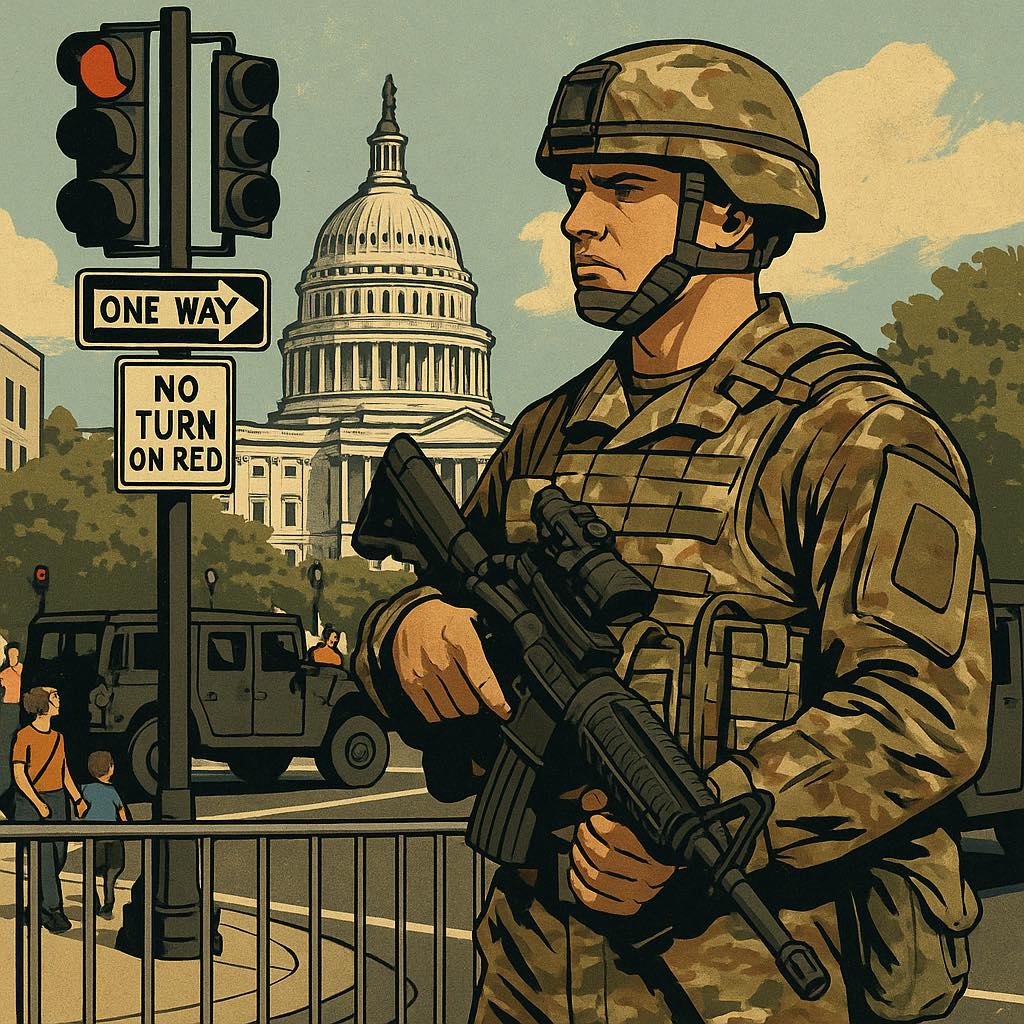
Picture the scene this deployment evokes. The first thing you notice is the boots. Not the sound: the presence. Standing in the shadow of the Smithsonian steps, leaning against steel barricades at the Navy Yard, posted outside Union Station. They’re not lost tourists in olive drab. They’re here because someone in the White House decided a city with falling crime needed soldiers for the shot list.
Heat shimmers off Pennsylvania Avenue, blurring the view of the Capitol dome. A soldier shifts his weight in body armor. The Guard troops were initially unarmed; their weapons remained in the armory. Behind him, a mother keeps her kid close, eyes darting between the men in fatigues and the ice cream truck idling at the curb.
It smells like asphalt and exhaust. Somewhere a loudspeaker crackles, the voice too muffled to catch, but sharp enough to feel official. A black SUV hums past, windows blacked out, the kind you see in action movies when the next scene is about to turn violent.
The sensory scene above is imagined, not an eyewitness report. The policy behind it is real: this isn’t a foreign capital. This isn’t the “before” picture from a human rights report. This is Washington, D.C., the day after the president issued an emergency order for the use of the city’s police and a separate memorandum mobilizing the National Guard.
Not because the numbers demanded it (crime is down, way down), but because the image does.
The Stunt They’re Pulling
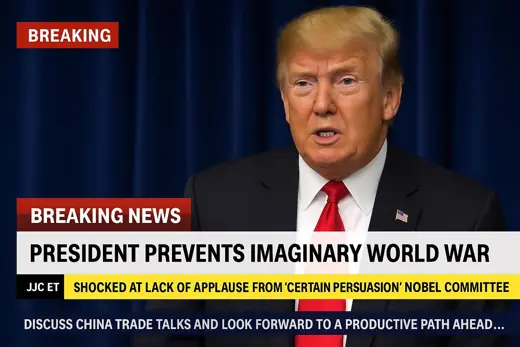
A block away, the optics are working exactly as planned. News crews pan across the line of uniforms, cutting the tight shots into B-roll for tonight’s newscast. On the chyron: “FEDERAL TROOPS IN D.C.” The President will get the image he wanted before a single arrest is made.
What doesn’t fit in the frame is the fine print. The administration issued two separate actions on August 11. Executive Order 14333 invoked Section 740 of the D.C. Home Rule Act for Metropolitan Police Department services. The Guard mobilization came in a separate memorandum to the Secretary of Defense. A police-control deadline cannot tell us when the soldiers go home.
Section 740 lets the President require MPD services for federal purposes when he determines that emergency conditions require them. The executive order delegates direction of those services to the Attorney General. That is a substantial assertion of federal control over local policing. Put it beside the Guard deployment, and the political picture is troubling enough without pretending the two have the same legal clock.
Normalizing the Unthinkable
If you strip away the sirens and the sandbags, what’s left looks disturbingly familiar. We’ve seen these images before, not in our own cities, but in footage from countries where a central leader decides the local government can’t be trusted, declares an “emergency,” and sends in forces loyal only to him. The justification is always the same: safety. The results are always the same: a precedent that makes the next deployment easier.
The Guard memorandum says the deployment continues until the President determines that law and order have been restored. Section 740’s police deadlines do not set its end date. That makes the demand for a clear mission and an accountable exit all the more important. Every time a president uses soldiers on American streets for optics, the threshold for doing it again gets lower. What was once extraordinary becomes routine. And when it’s routine, it’s no longer questioned.
What We Fight For
We can debate policing policy, sentencing laws, and bail reform until the sun comes up. But there’s a line you don’t cross: using military presence as a campaign backdrop. That line exists to protect the country from its own worst impulses, from letting fear, or the performance of fear, justify a show of force.
This isn’t a rescue mission. It’s a broadcast set dressed in camouflage and body armor, built to make a city with falling crime look like a war zone. If we accept that without pushback, we’re telling future presidents they can do it anywhere, for any reason, whenever the polling says it might play well.
America doesn’t need more troops in the streets to feel safe. It needs leaders who can tell the truth without staging a battle scene in the heart of the capital.
Sidebar: Section 740 in 60 Seconds
• What it is: Emergency authority over MPD services for federal purposes.
• Police deadlines: Service beyond 48 hours requires written notice to designated congressional leaders. Ordinarily, service ends at the emergency’s end, after 30 days, or upon a termination resolution becoming law, whichever comes first. Extension beyond 30 days requires a joint resolution enacted into law. A special rule applies when Congress is adjourned sine die.
• What it does not do: Set the duration of the National Guard deployment.
• The separate Guard order: The August 11 memorandum ties duration to the President’s determination that law and order have been restored.