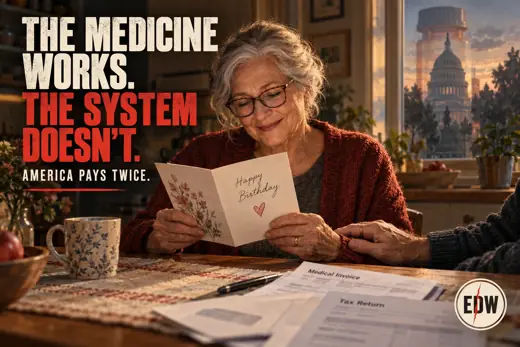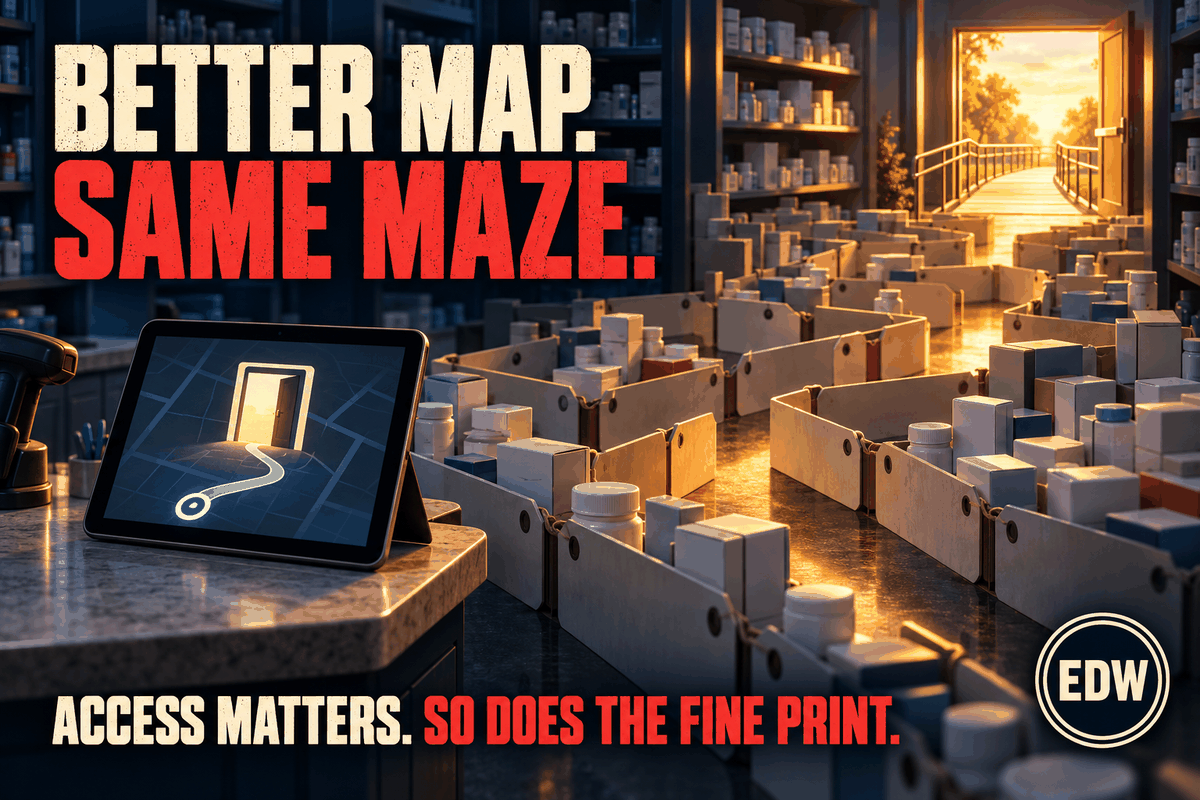
If you’ve seen headlines celebrating “TrumpRx” as if it’s a magical new cure for America’s drug prices, take a breath.
Because the fine print matters.
Reuters reports TrumpRx doesn’t sell drugs directly. It’s a website, an index, an on-ramp for cash prices and discount pathways. GoodRx supplies pricing technology for some of its listings, including more than 30 Pfizer medicines at launch.
Which raises a painfully obvious question:
If part of the pricing technology is GoodRx… are we celebrating a new policy, or did someone just put a government logo on something that already existed?
Here’s the part people should say out loud. With GLP-1s like tirzepatide (Zepbound), Eli Lilly already offered direct-to-consumer cash pathways. Its vial program had advertised $349 and $499 monthly prices in 2025. On December 1, before this article and the TrumpRx launch, Lilly lowered prices to $299 for 2.5 mg and $399 for 5 mg, with $449 pricing for higher doses through its Self Pay Journey Program. The higher-dose offer has eligibility and timely-refill conditions; other prices can be higher.
STAT also notes the broader reality: for these headline drugs, TrumpRx is largely pointing people to manufacturer cash prices and coupon-style discounts that were already available, just hard to navigate if you don’t live online and speak fluent healthcare bureaucracy. Some of those prices followed earlier agreements with the White House, so their availability before the website launched does not mean the administration had no role in them.
So yes, if TrumpRx helps someone find a cheaper price, good. Truly. No sarcasm there. People deserve access. People deserve dignity.
But let’s not insult the public with the implication that the system has been “fixed” because we launched a link hub.
That is not reform. That is routing.
Real reform would answer questions that never go away:
Why do patients have to “hunt” for affordability like it’s an Easter egg?
Why can a drug be “$1,000+” on one screen and “$300-something” on another, depending on which doorway you enter?
Why does the ability to keep your health depend on your skill at navigating corporate programs, coupon stacks, and fine print?
If a portal helps people pay less this month, I’ll clap.
But I’m not going to confuse a better coupon map with a fair healthcare system.
Because Americans don’t need a scavenger hunt. We need structural pressure on pricing power, so affordability is the default, not the prize for those who have time, bandwidth, and luck.
If this helped you cut through the spin, share it. Follow Executive Dysfunction Weekly (EDW) if you want evidence-first breakdowns that don’t care whose logo is on the press release.
EDW•