This is a forecast, not a verdict. The point here is not to prove that every domino has already fallen. The point is to look at the table honestly and ask what kind of presidency builds this many pressure points at once, then expects the structure to hold. Because that is where we are now. Not at the end of the story. At the point where the story starts to reveal its shape.
What shape is that?
A presidency that promised strength and control has delivered compounding risk. Trump reopened the Greenland fight and let the White House say military force was “always an option” on January 6, before publicly ruling out force on January 21. His emergency-law tariffs were struck down by the Supreme Court. His administration has pushed the Supreme Court to weaken lower-court judges while publicly treating judges who rule against him as illegitimate obstacles. He threatened jail for a reporter over Iran coverage. Those are not isolated episodes. They form a pattern of government by coercion, grievance, and personal will.
Then there is Iran.
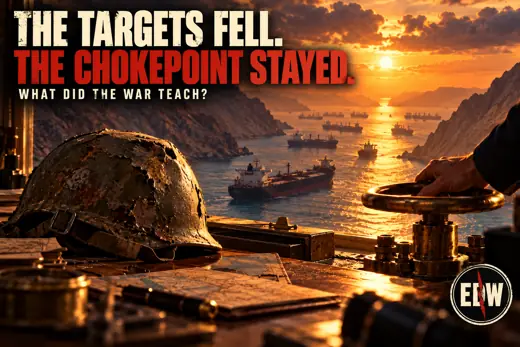
And Iran matters because this is where several of his weaknesses collide at once. The war has driven up gas and oil costs and helped push the University of Michigan’s preliminary April consumer-sentiment index to a record low, and is already worrying White House aides ahead of the midterms. Public opinion on the war is weak. Reuters/Ipsos reporting shows broad disapproval of the conflict, while a large majority of Americans say they want U.S. involvement ended quickly even if all objectives are not achieved. That is a bad place to stand when you built your political identity around toughness, prosperity, and getting the fundamentals under control.
Now ask the harder question.
What happens if the war ends in a deal that looks smaller, weaker, and murkier than the rhetoric that sold it?
That risk is real. As of April 11, JD Vance is in Islamabad leading the U.S. delegation for talks with Iran. That means the vice president is no longer a bystander to this file. He owns part of it. If the talks yield something fragile, confusing, humiliating, or inflationary, the damage does not stop with Trump. It spreads into the next layer of Republican leadership.
That is how ownership works in politics. Not fairly. Just thoroughly.
Let’s say the conspicuous thing out loud. The administration’s Epstein mess does not have to be the cause of the war for it to matter politically at the same time. Trump’s team promised disclosure, got hit with bipartisan anger over how the files were handled, and Trump fired Bondi on April 2 amid frustration over the Epstein files and, according to Reuters’ sources, her failure to pursue his adversaries aggressively enough. So while the White House was trying to project total command abroad, it was also hemorrhaging trust at home on one of the ugliest credibility issues in American public life. That kind of overlap matters. Voters experience it as one condition: chaos.
That is the phrase I keep coming back to. Compounding risk.
One trade fight is survivable. One court fight is survivable. One foreign war is survivable. One press crackdown is survivable. One credibility collapse around Epstein is survivable. But what do you call it when all of them start stacking on top of each other?
What do you call it when a government starts looking brittle in five directions at once?
What do you call it when allies trust you less, judges resist you more, the press treats you as openly menacing, prices rise, and the one big foreign-policy showpiece you are now selling depends on a negotiation you cannot afford to lose and cannot fully dominate?
That is not strength. That is load-bearing instability.
There is another layer here that people are going to feel before they can always explain it. America’s standing is changing. Greenland did damage. The threats against NATO did damage. The attacks on judges do damage. The attacks on the press do damage. Governing major military operations by Truth Social does damage. People around the world are drawing conclusions, and the conclusion is not simply “Trump is Trump.” The conclusion is that the American voter put him back. That means this stops being his reputation alone. It becomes ours. That is what democratic ownership means when things go wrong.
The world does not separate the presidency from the people who knowingly returned it to office.
That has consequences for the Republican Party.
I am not saying collapse is guaranteed. I am saying the structure is rotting in ways that can become obvious very fast. If the economy stays painful, if Hormuz remains unstable, if Vance comes home from Islamabad carrying a smaller deal than the bravado promised, if Trump keeps fighting the courts and media while demanding that voters ignore prices and trust his “instincts,” then this party enters the midterms and the 2028 cycle carrying the accumulated cost of one man’s compulsion to dominate every institution he touches.
That is the forecast.
Politics punishes certainty. This administration is building the kind of record that ages badly and all at once. The tariffs, the court fights, Greenland, the war, the gas prices, the alliance damage, the press threats, the Epstein mess, the brittle negotiations, the public exhaustion. Every one of those things can be spun for a week. A whole stack of them becomes harder to spin by the month.
So ask yourself a simple question.
How long can a political coalition survive when it promises order and keeps delivering heat?
How long can it promise strength and keep producing fragility?
How long can it promise clarity and keep governing by impulse?
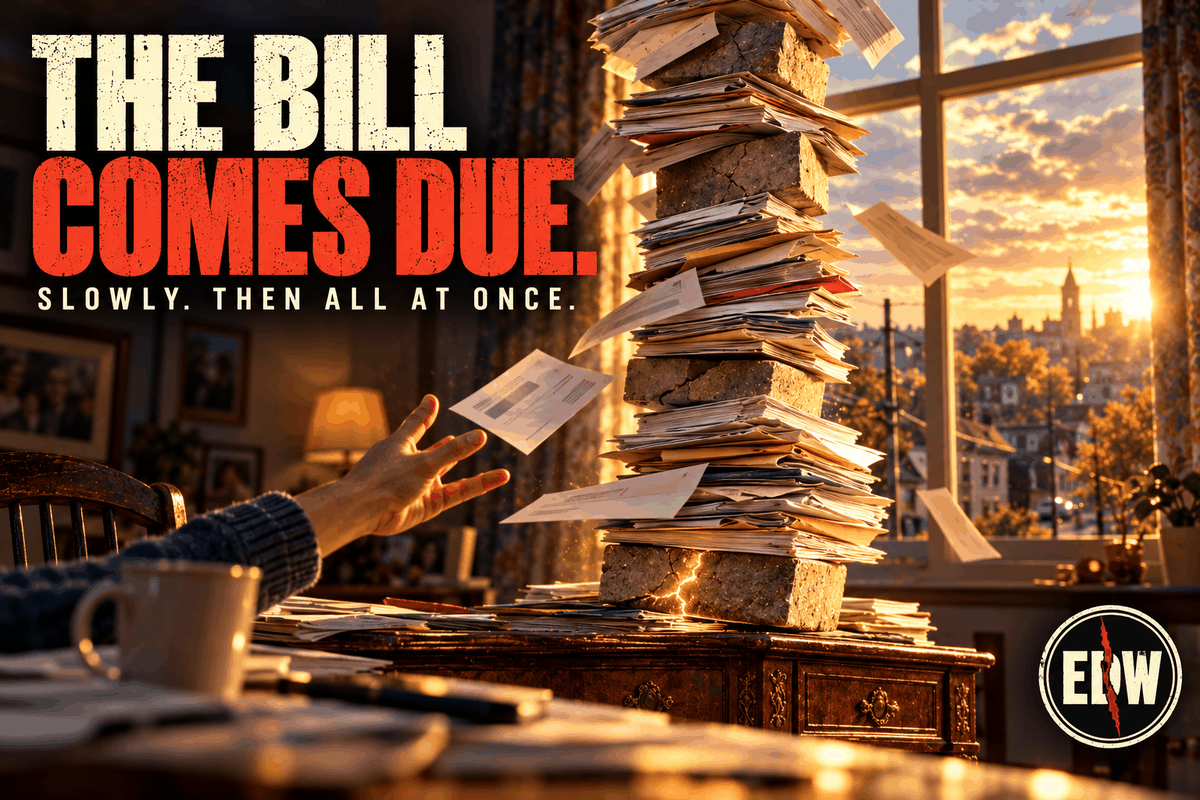
The answer may not come tomorrow. Big political bills rarely arrive by courier. They accumulate interest first.
This one is accumulating fast.
If this said out loud what you’ve been trying to piece together, share it around. Follow EDW. Drag a few more people into the part of the conversation where pattern matters more than slogans. That is where the future usually starts showing itself.
EDW•