I want to help this country. I want us to be able to ask a reasonable question without spending the next three hours calling each other names.
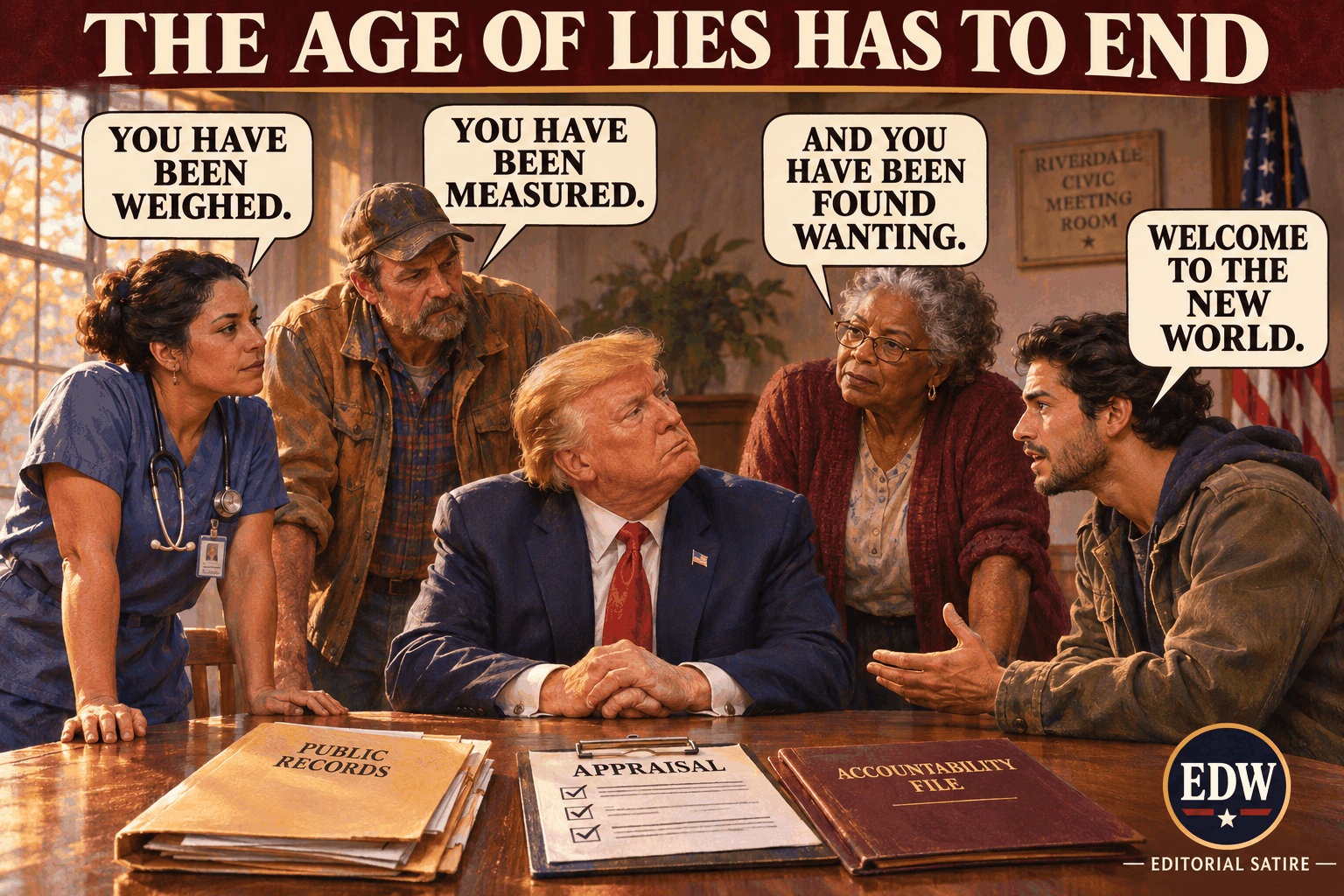
Americans have weighed and measured the people running their government. Democrats have won control of both houses of Congress and will take over in January. [1]
I want them to use that authority to get answers and make our lives better. We still have bills to pay and healthcare to afford. Those problems did not disappear when the races were called.
Hakeem Jeffries is promising action on healthcare and living costs. Rep. Robert Garcia, expected to lead the House Oversight Committee, has already issued his warning: “Lawyer up.” [5]
Don’t go after Trump. Go after the truth.
If the evidence establishes wrongdoing by Trump, act on it. If it implicates a Democrat, act on that, too. If an accusation doesn’t hold up, say so. We cannot promise an honest investigation while deciding in advance which answer we’re willing to accept.
Last week, I wrote about the Prairie Correctional Facility in Appleton, Minnesota. The federal purchase agreement lists the price at $495,639,588. KARE 11 reported that CoreCivic had offered the prison to Minnesota for $75 million the previous year. [2] [3]
That is a difference of roughly $420.6 million. The difference alone doesn’t prove fraud or tell us the property’s fair value. It gives us a very specific question to ask the people who spent our money: what justified the price?
Since my article ran, CoreCivic has issued a fuller explanation. In an October 31 statement, the company says independent appraisers hired by the government considered replacement costs, depreciation, land and renovations. It also says the $75 million figure was preliminary, dated back to 2015 and was never an appraisal. [4]
Then show us the appraisal and the correspondence behind the earlier offer. Explain the renovations, the assumptions and who approved the purchase. What alternatives did they consider? If the records support the price, explain how. If they reveal waste, favoritism or misconduct, establish who was responsible and what can be done about it.
Almost half a billion fucking dollars of our money deserves that much.
I don’t need to know how you voted to ask whether you want an explanation. We can disagree about immigration policy and still expect the government to account for a purchase. I would want the same records if a Democratic administration had signed the agreement.
If I ask for the appraisal and someone calls me a Trump hater, I still haven’t seen the appraisal. If someone else declares the transaction criminal before examining the evidence, I still haven’t learned what happened.
That’s why I brought out Logic in the Wild. I want us to recognize when an argument has stopped addressing the question, including when we’re the ones taking it somewhere else.
Calling someone a socialist doesn’t establish whether a policy works. Calling someone an idiot doesn’t disprove their numbers. Finding something awful the other party did doesn’t answer a question about what your party did. We can examine both without allowing either to disappear.
What are you claiming, and where did the information come from? Does the document say what the headline says it says? What evidence would change your mind?
That last question belongs to me, too. I’ve had to admit that I’m not as open-minded as I thought. I rush to conclusions, and I can recognize the flaws in somebody else’s argument faster than I recognize what I’ve assumed in my own.
I don’t want people trusting something because I wrote it. I want them to be able to check it. If I’ve left out context that changes the meaning, bring it to me. If I’ve got a fact wrong, it needs correcting, even if the original version was getting shared and the correction is inconvenient.
Do the same with the Epstein files. Account for what was released and what was withheld. Examine who made those decisions and whether the reasons were legitimate. Protect survivors’ identities, investigate credible evidence and follow it regardless of the names involved.
A name appearing in a file is not, by itself, proof of a crime. A powerful person’s denial doesn’t settle the matter either. Do the work required to distinguish an allegation from an established fact. If a Democrat helped conceal evidence or committed a crime, I want that established just as thoroughly.
I’m not asking anyone to pretend every side is equally responsible. If the evidence points overwhelmingly in one direction, report that. Fairness doesn’t require finding somebody on the other team to make the numbers come out even.
I want people to be able to change their minds without being humiliated. Someone who believed a false claim may have trusted the wrong source. Someone asking a clumsy question may be trying to understand. We should give them a chance to do that before deciding what kind of person they are.
We also need to distinguish a mistake from deliberate deception. A public official who knowingly misleads people deserves to be held accountable. Calling everyone who disagrees with us a liar makes it harder to have that discussion when it is justified.
The people I disagree with are still my neighbors. We have to live in the same community after the argument is over. I want us to be able to talk about making life better here without deciding that everyone who sees it differently deserves our contempt.
Even when we establish the facts, we will still disagree about what to do. We can argue about the proper size of government, what a program should cost or which policy best protects people. At least we’ll be arguing about the actual choices.
Democrats should be able to investigate credible misconduct and work on healthcare, housing and the cost of living. We should judge them by whether they get us answers and whether their policies help. Winning the election doesn’t exempt them from explaining what they do with our money.
I want them to succeed at those responsibilities. I’m going to keep asking questions when they don’t. Voting for someone doesn’t relieve me of that obligation.
Start with that prison. Show us the appraisal and explain the purchase. Let us examine the answer and ask the next question.
EDW•