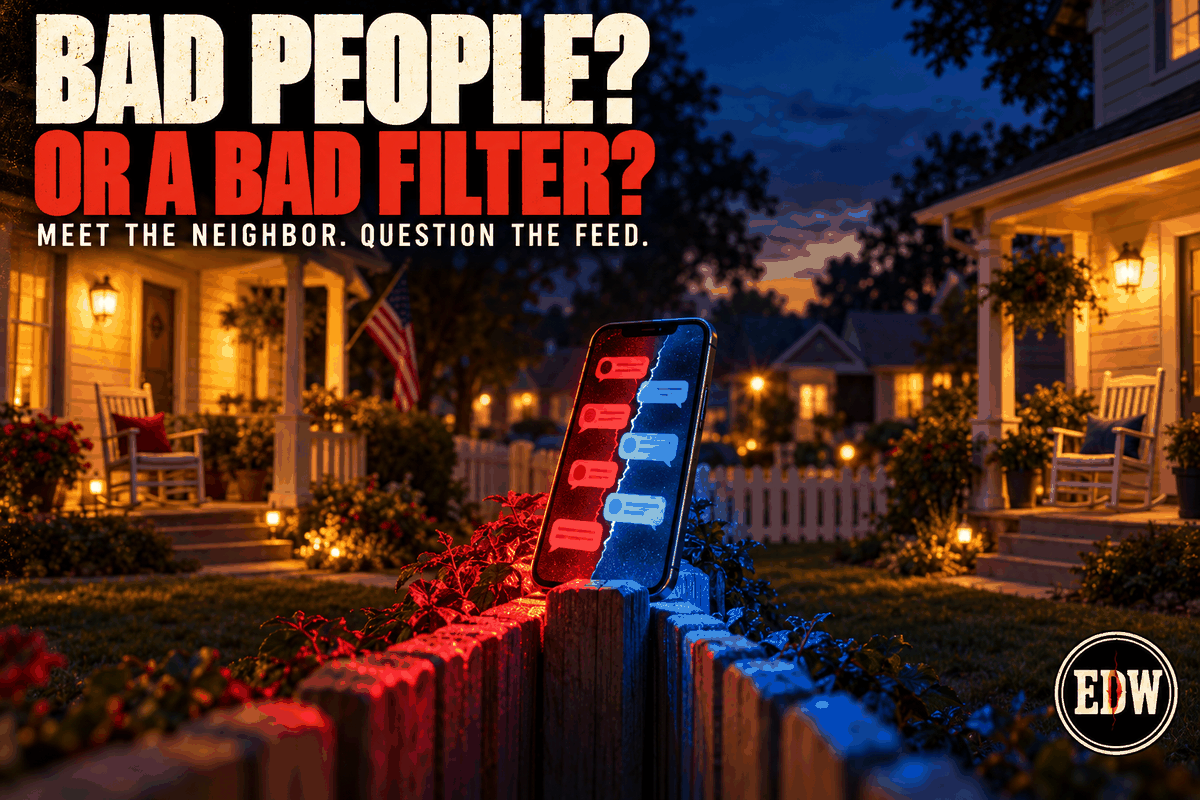
A Pew Research Center survey across 25 countries asked a simple question: Are the morals and ethics of other people in your country good or bad? The report was released March 5, 2026. U.S. responses were collected March 24–30, 2025.
The United States was the only country among the 25 surveyed where a majority answered “bad.”
53% of U.S. adults rated their fellow Americans as morally/ethically bad, vs 47% good.
Read that again.
This is not “Americans are uniquely immoral.”
It’s that Americans were especially likely, among those surveyed, to rate their compatriots’ morals negatively.
That distinction matters, because democracy runs on one scarce resource: baseline trust. Not blind trust. Not “agree with me” trust. Just the minimum assumption that your neighbors are mostly human beings, not villains.
Pew also found the judgments track partisan identity: 60% of Democrats/leaners rated fellow Americans as bad, vs 46% of Republicans/leaners.
And it’s not just us. In more than half the countries surveyed, people who did not support the governing party or parties were more likely to rate fellow citizens negatively.
That’s the tell: we’re not evaluating people.
We’re evaluating status.
Politics has become a morality play, and we’re casting half the country as “bad” so we don’t have to wrestle with complexity.
The Washington Post notes Pew hasn’t asked this exact “bad/good fellow citizens” question before, so we don’t have trend data yet.
But we do have plenty of evidence that the “other side is immoral” instinct has been rising for years.
Here’s the EDW bottom line:
When a country decides “most people here are bad,” everything becomes easier to justify.
Censorship feels like hygiene.
Violence feels like defense.
Lies feel like necessity.
And accountability collapses because “the enemy deserves it.”
The antidote is boring, and that’s why it works:
• Receipts over vibes. If you’re making a claim, name your source.
• Actions over souls. Argue about policies and behavior, not whether millions of strangers are “good” or “evil.”
• Proximity over algorithms. Talk to an actual neighbor before you let a feed teach you what “people like that” are.
If we can’t recover the habit of seeing each other as imperfect citizens instead of bad people, we’re not headed for a policy debate. We’re headed for a permission structure.
If this resonates, follow EDW and share so it doesn’t die in one comment thread.
#ExecutiveDysfunctionWeekly #EDW
https://www.facebook.com/100059456532991/posts/1295241812467691/?
EDW•