In recent weeks, the Trump administration has loudly celebrated lower-than-expected inflation numbers. At her July 17 briefing, White House Press Secretary Karoline Leavitt highlighted flat producer prices in June. That was not the same as flat consumer prices: the June CPI had risen 0.3 percent for the month and 2.7 percent over the year.
But what does this really mean, and what’s actually going on behind these numbers?
First, let’s clearly define what a tariff is. Simply put, tariffs are taxes placed on goods imported from other countries. When the United States imposes tariffs, goods coming from countries like China or Brazil become more expensive. The intention, according to President Trump, is to protect American businesses by encouraging companies to produce goods here at home instead of overseas.
However, the reality is more complicated. While tariffs can indeed help some American manufacturers in the short term, they generally cause prices to rise for everyday consumers. When companies face higher costs due to tariffs, they usually pass those costs along to shoppers at grocery stores, hardware stores, and clothing outlets.
So, why hadn’t tariff-driven price increases been larger?
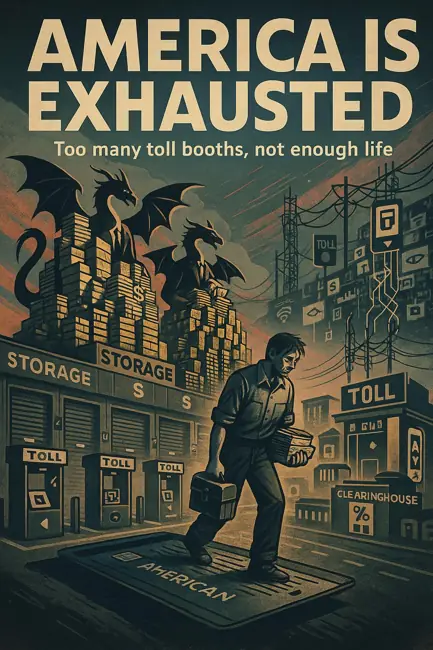
The answer lies in how businesses respond to uncertainty. President Trump has repeatedly announced tariffs, only to delay their implementation at the last moment. Businesses, trying to protect themselves, have responded by stocking up heavily on imported goods before planned tariff increases. They borrowed money at low interest rates to buy more than they usually would, effectively creating large stockpiles.
Now, these businesses have warehouses filled with extra inventory. To pay back those loans, they’re forced to sell off these excess goods quickly, often at discounted prices. This temporary sell-off explains the unusually low inflation numbers we’ve recently seen. It’s not a result of stable economic policy, but rather the temporary and strategic behavior of businesses preparing for an uncertain future.
However, this situation won’t last forever. Once these stockpiles run out (and they inevitably will), companies must order more goods, this time facing significantly higher costs due to tariffs. At that point, prices will rise, and we’ll see a surge in inflation.
President Trump has set August 1 as the new deadline for many higher country-specific reciprocal tariff rates. The base 10 percent reciprocal tariff, subject to exemptions, has already been in force since April 5; the extension does not suspend it. If history is any guide, it’s possible he’ll delay this deadline once again to avoid causing immediate economic pain. But continuously delaying tariffs creates ongoing uncertainty, which itself hurts American businesses, consumers, and workers.
Real economic strength comes from stable, predictable policies, not repeated threats, delays, and confusion. When policy decisions swing unpredictably, businesses struggle to plan effectively, leading to higher prices and instability for everyday Americans.
The takeaway is clear: the current low inflation numbers are temporary and don’t reflect true economic stability. They’re the result of businesses responding rationally to uncertain policies. Tariffs already in force, and any further increases, could put more upward pressure on prices at your local store as inventories turn over.
It’s important to understand why this is happening, rather than being misled by temporary economic indicators.
Our leaders owe us policies that encourage economic certainty and stability, not quick-fix solutions or repeated delays.
It’s the American people who ultimately bear the cost of economic uncertainty, and it’s our responsibility to remain informed about what’s truly behind the numbers.
EDW•