That framing is a false choice.
I want violent criminals removed. I want people who are here unlawfully and committing serious crimes dealt with. And that position is not some fringe view on the left. In a Pew Research Center survey, among Americans who support deporting “some” immigrants living in the U.S. illegally, 97% said people who have committed violent crimes should be deported.
So when someone says “you’re outraged because you love criminals,” what they’re really doing is trying to avoid the real debate, which is not whether immigration laws exist, but how government power is used in enforcing them. Pew’s research captures that tension directly: Americans broadly agree that at least some deportations should happen (especially for violent crimes), but there’s far less agreement on how enforcement should be carried out.
Here’s what many of us are actually objecting to:
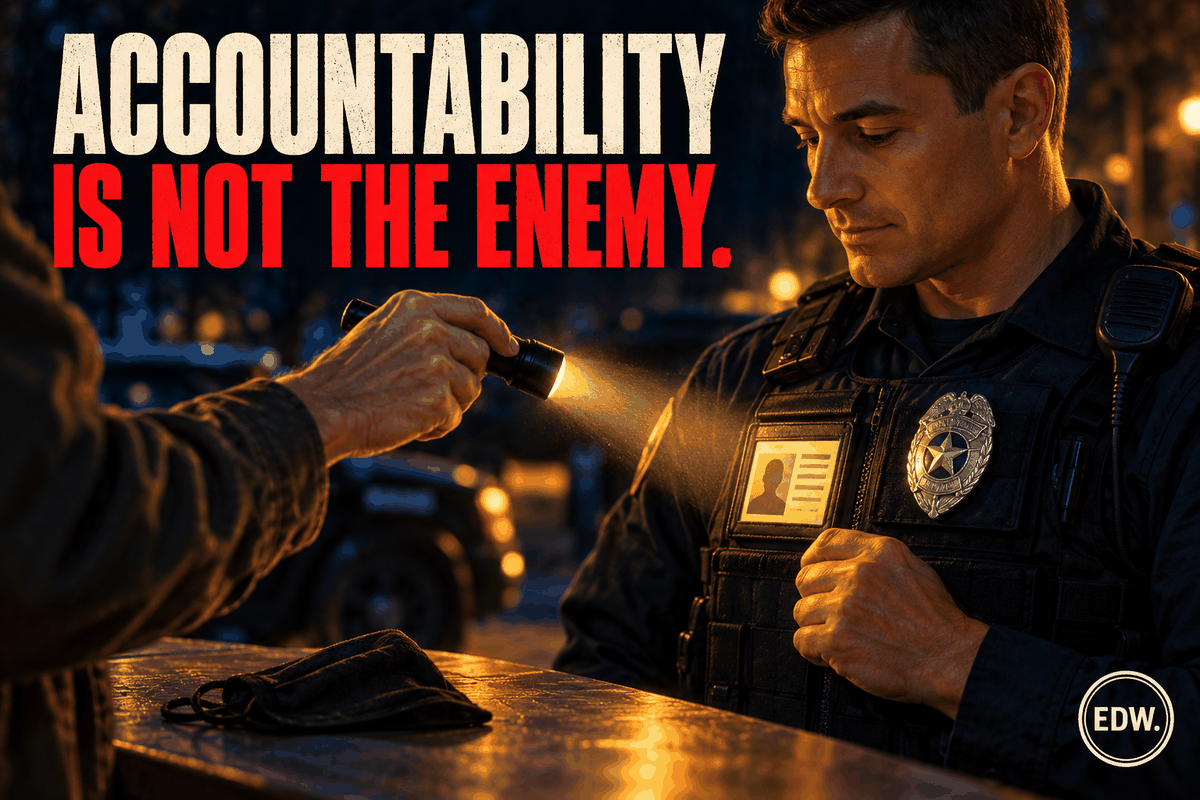
1) Accountability and identification.
When armed federal agents operate in communities while masked and not clearly identifiable, I worry that this erodes public trust and increases the risk of escalation and misidentification. Reuters has reported on federal officers in Minneapolis operating in military-style gear and masks that hide their faces amid the current enforcement surge.
Washington lawmakers are now openly debating that exact issue, whether officers (including federal agents operating here) should be prohibited from wearing face-concealing masks in routine public interactions except in narrow circumstances.
2) Proportional tactics and collateral harm.
Criticizing tactics is not the same thing as opposing enforcement. It’s saying: do the job, but do it in a way consistent with due process, restraint, and public accountability.
3) The “worst of the worst” narrative doesn’t match the full picture.
Even if enforcement is intended to focus on serious criminals, the data and reporting show the net is wider. CBS News, citing January 15, 2026 DHS data, reported that roughly 47% of people in ICE custody had criminal charges or convictions (the remainder had no recorded U.S. criminal charges or convictions in that dataset).
TRAC’s analysis of ICE’s own posted figures similarly describes a shift toward detaining more people without criminal convictions in 2025.
None of that means “don’t deport violent offenders.” It means: don’t sell the public a simplified story that erases everyone else impacted by the tactics.
And on the law enforcement point, this matters to me personally:
I respect law enforcement. I want officers to go home safe. If someone assaults an officer, threatens an officer, or turns a situation violent, they should be arrested and prosecuted. Peaceful protest is not the same thing as attacking law enforcement.
But it is also reasonable, and very American, to say:
Government agents exercising force in public should be identifiable, accountable, and held to consistent standards.
So here’s my line in the sand:
• Pro-deporting violent criminals is not “right-wing.” It’s broadly supported.
• Pro-law enforcement does not mean endorsing every tactic, especially when tactics reduce transparency and heighten risk.
• Opposing masked, anonymous-style enforcement is not being “pro-rapist.” It’s being pro-accountability.
If an argument requires pretending your neighbors “love criminals” just because they’re demanding identifiable badges, clear rules, and proportional force, then it’s not an argument. It’s a shortcut around reality.
EDW•