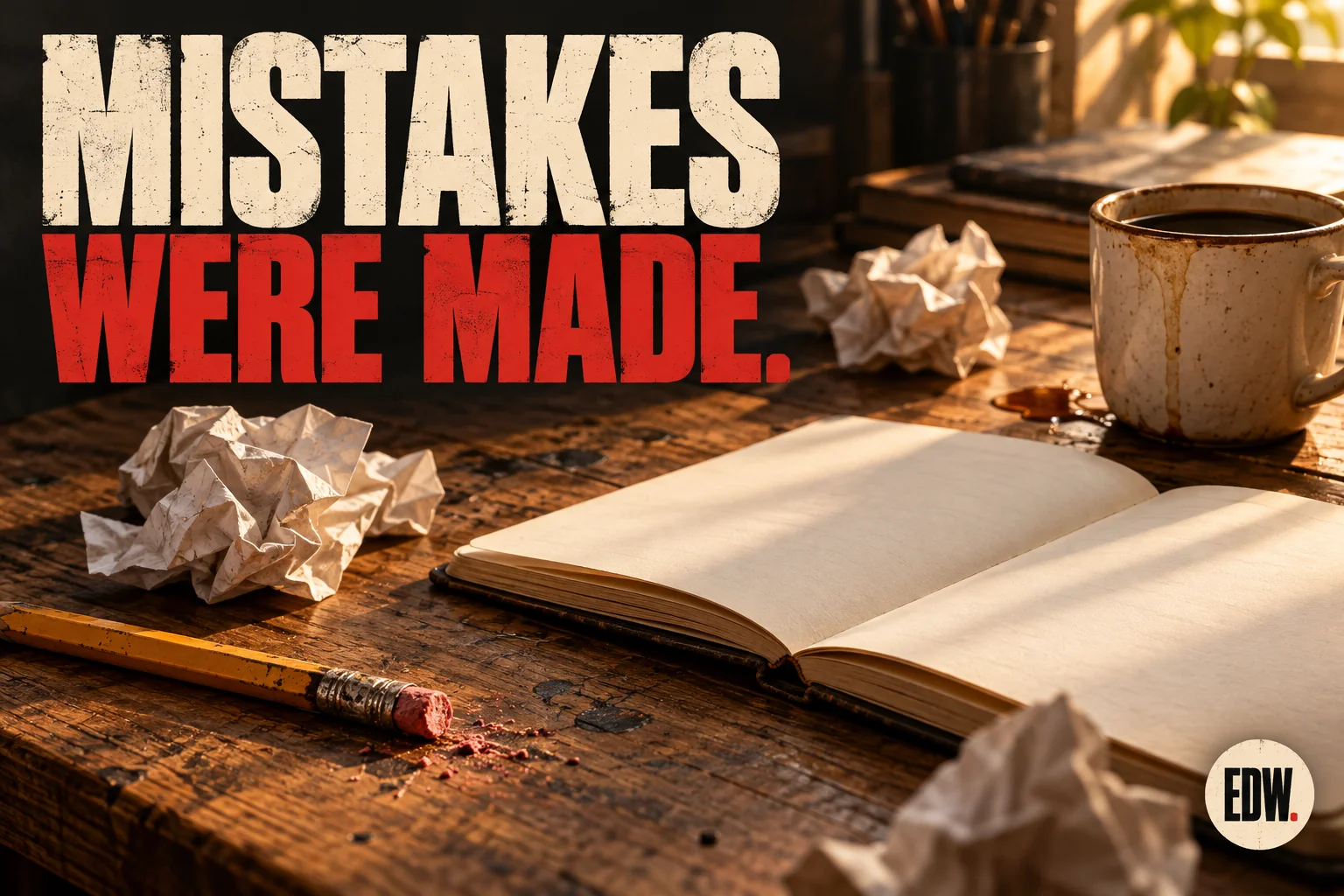
Ah, mistakes.
Those pesky little reminders of our humanity that we used to embrace with a shrug and an embarrassed chuckle, acknowledging, “Hey, I’m human.” But in our shiny, modern, perfectly filtered age of flawless Instagram lives and politicians who couldn’t admit to tripping if you showed them a security tape of their own two feet betraying them, mistakes have become a quaint relic of simpler times, like VCRs, fax machines, or bipartisanship.
Remember when admitting a mistake was honorable? Leaders once owned their blunders, stood up in public, and delivered mea culpas with actual remorse. Hell, people used to resign over mistakes, paving the way for (brace yourselves) growth and learning.
Today?
Not so much.
Our political leaders could accidentally launch nuclear missiles at Canada (oops!) and still confidently tweet something along the lines of, “Missiles were tremendous. Very well launched. Canada was practically begging for it, believe me!”
Admitting you’re wrong nowadays is about as popular as paying full price for a movie ticket or trusting your teenager with your credit card. Why bother learning from mistakes when we can just pretend they didn’t happen? Who needs character building when denial is so much cheaper and easier? And so, predictably,
we’ve STOPPED FUCKING LEARNING.
Entire generations have adopted the motto, “Mistakes were made, but certainly not by me.” Welcome to a world where accountability is considered more terrifying than student debt.
Let’s talk education, a hilarious misnomer these days, given that many college students attend classes the same way they watch Netflix: distractedly and annoyed when asked to pay attention. Professors passionately outline theories and evidence, only to be met with glazed eyes and apathetic scrolling.
Critical thinking, you ask?
Oh please.
That went out of style along with bell-bottoms and rational public discourse.
Our kids openly question the relevance of math, and instead of correcting them, parents double down with gusto: “You’re right, Timmy, you’ll never use algebra in real life! Now go ask Siri how to tip your DoorDash driver.” Thanks, mom and dad: your anti-intellectualism is showing. In a society that desperately needs problem-solvers, innovators, and thinkers, we’ve decided to glorify ignorance like it’s a national pastime.
The worst part?
By refusing to admit mistakes, we aren’t just ignoring lessons; we’re actively breeding generations who think self-reflection is a skincare routine. Sure, stubborn denial might protect your fragile ego temporarily, but eventually, reality comes knocking.
Hard.
Mistakes are supposed to be painful; that’s how we learn. The bigger the screw-up, the deeper the lesson, unless, of course, we never acknowledge the screw-up in the first place. But hey, why ruin a perfectly good streak of blissful ignorance with self-awareness?
Here’s a wild thought: maybe we should revive the ancient art of admitting mistakes.
Imagine the chaos!
Leaders would actually improve policies based on evidence rather than opinion polls. Students might find algebra useful when they realize it powers the apps they use daily. Critical thinking might even make a comeback, sprouting through the cracks of ignorance like weeds of enlightenment.
Or we can continue down our path of stubborn ignorance, cheering our mistakes like victories and building statues to the ego rather than the intellect. After all, who needs wisdom when we’ve got hashtags?
So yes, dear readers, we’re sad.
Very, very sad.
But at least we’re honest about it; see how that works?
Mistake admitted, lesson learned.
Buckle up, world.
Admitting mistakes might be unpopular, but EDW is here to say it’s high time we make humility fashionable again. Because frankly, we’re tired of being stupid.
Aren’t you?
EDW•